Book recommendations, reviews, and reading lists.

Charlotte Brontë
1 book on Read & Recommend
What Readers Say
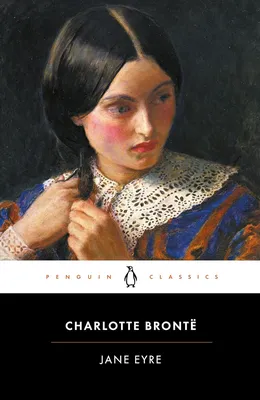
Jane Eyre is the book readers keep coming back to — not just once out of obligation, but year after year, sometimes every autumn like clockwork. That kind of loyalty tells you something. What readers consistently point to is the electricity of the central dynamic: Jane is plain, poor, and utterly unwilling to fold herself into someone else's shape, and Rochester is controlling and secretive in ways that should be dealbreakers — and yet the tension between them holds. Readers don't describe it as a comfortable romance. They describe it as something that earns its payoff because Jane refuses to compromise herself to get it. The famous closing line lands because of everything that came before it.
Charlotte Brontë also surfaces in a different kind of conversation — the one about authors who had strong opinions about other authors. Her 1848 letter dismissing Jane Austen's work as an "accurately daguerrotyped portrait of a commonplace face" with no "open country, no fresh air, no blue hill" is the kind of literary shade that stays with you. Whether you agree with her or not, it tells you exactly what she was after in her own work: wildness, intensity, atmosphere. That's what readers find in Jane Eyre, and it's why the book keeps getting recommended alongside gothic, atmospheric, and emotionally charged reads.
Where to Start
Jane Eyre is the obvious and correct starting point, and the mentions don't suggest otherwise. Readers recommend it across wildly different contexts — books about loneliness, classics you must read, comfort rereads, great love stories — which means it works for almost any reader coming to Brontë for the first time. If you've already read it, there's no clear second recommendation from the mentions; the signal is strong and singular on this one.
Readers who discover Brontë through a broader interest in "feminine literature" or 19th-century women writers tend to pair her with Emily Brontë's Wuthering Heights, treating the two as companion reads. The atmospheric, emotionally intense quality carries across both.
Reading Context
Charlotte Brontë fits most naturally alongside the other 19th-century women writers — Austen, Eliot, the Gaskells — but she occupies a distinct register. Where Austen is precise and ironic, Brontë is raw and stormy. Readers group Jane Eyre with gothic fiction as readily as they group it with romance or classics, which makes sense given the locked rooms, the secrets, and the wild weather that runs through the book.
The book shows up in discussions of loneliness, feminist literature, comfort reads, and great love stories — a range that reflects how much readers bring to it depending on where they are in their lives. It's one of those novels that seems to grow with you rather than staying fixed at whatever age you first encountered it.