Book recommendations, reviews, and reading lists.


Cormac McCarthy
1 book on Read & Recommend
Writing Style
Readers describe McCarthy's prose as spare, biblical, and utterly unlike anything else in American fiction. His refusal to use quotation marks and his minimal punctuation throws some people off at first, but fans consistently praise the way his stripped-down style forces you to lean in and pay attention. The word that comes up most is "beautiful" -- followed closely by "brutal." He writes landscapes like a painter and violence like a war correspondent, often in the same paragraph. One reader called his writing "magnetic," and that seems right; people talk about underlining entire sections of prose just for the craftsmanship.
The emotional impact is the other constant. The Road gets described as a book that "ages" you, that people still can't discuss years later without getting upset. Blood Meridian's violence is so relentless that readers report putting it down multiple times. A minority find his style pretentious, but they're vastly outnumbered by people who consider him one of the greatest American writers who ever lived.
Where to Start
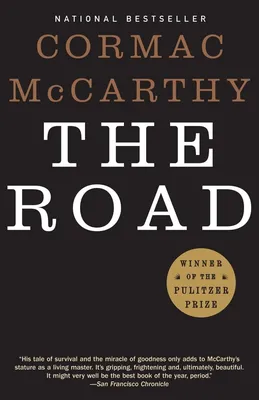
The consensus entry point is The Road. It's short, propulsive, and readers regularly finish it in one sitting. It's also McCarthy at his most emotionally accessible -- the father-son relationship grounds the bleakness. Blood Meridian is widely considered his masterpiece and lands on nearly every "best of all time" list, but it's a harder read with dense, archaic prose and extreme violence. I'd say start with The Road, and if the style clicks, go to Blood Meridian next. All the Pretty Horses is the gentler on-ramp if you want the prose beauty without the devastation, and The Crossing gets singled out for its philosophical depth.
Similar Authors
Readers who love McCarthy frequently mention Larry McMurtry (Lonesome Dove), John Steinbeck (East of Eden), Tolstoy, and Faulkner as authors operating at a similar level of ambition. For the post-apocalyptic angle, Margaret Atwood's Oryx and Crake and Emily St. John Mandel's Station Eleven come up as companion reads. Charles Frazier's Cold Mountain gets mentioned alongside the Border Trilogy.