Book recommendations, reviews, and reading lists.

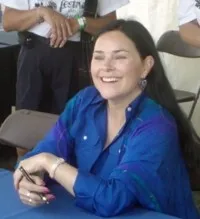
Diana Gabaldon
1 book on Read & Recommend
What Readers Say
The Outlander series comes up constantly when readers want something immersive — the kind of reading experience where you lose a week without noticing. The most consistent pitch is that it pulls you completely out of your own reality, and several mentions specifically bring it up alongside books like The Time Traveler's Wife and Water for Elephants when someone needs to escape. That's the niche Gabaldon has carved out: big, transportive, unapologetically romantic historical fiction that earns its length because the world it builds is genuinely worth living in for a thousand pages.
Claire Randall is the draw. Readers describe her as a strong female protagonist who gets put through hell and comes out the other side — exactly the kind of character people reach for when they need someone to root for. The love story with Jamie Fraser is central to everything, and the book doesn't pretend otherwise. What's interesting is that the most enthusiastic readers aren't embarrassed by how romantic it is — they treat that directness as a feature. Gabaldon commits completely, and for readers who are on the same wavelength, that's what makes the series work.
It's not without controversy. The books have a complicated reputation around how they handle sexual violence, and that comes up in multiple mentions — some readers warn against the series for exactly that reason, others love it anyway and acknowledge the tension. It's worth knowing going in. The series was also initially categorized as romance when it first came out, which readers now treat as a kind of undersell — the books are historical, fantastical, and romantic all at once, and none of those labels fully cover it.
Where to Start
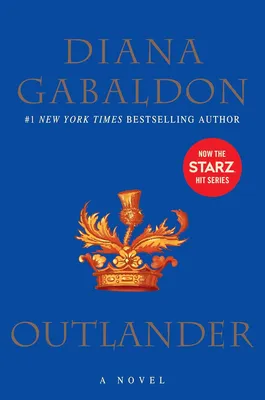
Start with Outlander, the first book. There's no real debate about this — every mention points to it as the entry point, and the premise does a lot of work quickly: a WWII-era nurse falls through a standing stone in the Scottish Highlands and lands in 1743. From there, the series builds on itself in a way that makes jumping in mid-sequence essentially impossible. The first book sets up Claire, Jamie, and the time-travel mechanics that the rest of the series depends on.
If you're skeptical about the romance angle, the strongest argument for trying it is that the relationship between Claire and Jamie is genuinely earned rather than assumed. Readers who go in expecting a bodice-ripper and find something more layered tend to become converts. That said, if the series' handling of assault is a dealbreaker — and it's a fair one — there's no getting around the fact that it's present.
Reading Context
Gabaldon fits into a loose category of big, sweeping historical fiction with romantic and fantastical elements — the kind of book that gets shelved in three different sections depending on the store. She's mentioned alongside books like The Mists of Avalon and The Time Traveler's Wife when readers are reaching for that specific feeling of getting lost somewhere else entirely. The series has been adapted into a television show, which gave it a second wave of cultural visibility — though at least one commenter notes that the show's handling of certain scenes pushed them away from the books entirely.
The series has real staying power. One mention describes working in a bookshop in the late '80s and early '90s, taking home a coverless stripped copy of the first Outlander — back when Gabaldon was shelved as a romance novelist and nobody expected the series to last. That shelf-life turned out to be substantial, which is its own kind of endorsement.