Book recommendations, reviews, and reading lists.


Douglas Adams
1 book on Read & Recommend
Writing Style
Douglas Adams wrote comedy the way a physicist thinks about gravity — like it was inevitable, not performed. Readers describe his prose as dry and conversational, full of asides that start as throwaway observations and end up making you rethink something fundamental. The humor isn't jokes with setups; it's a worldview where the universe is deeply absurd and indifferent, and somehow that's both terrifying and freeing. One Reddit commenter put it well: Adams' "dry but true humor" helped them take themselves less seriously and manage anxiety — which isn't what you'd expect from a comedy about hitchhiking through space.
What makes him hard to replicate is that the comedy and the philosophy are the same thing. A line like "Reality is frequently inaccurate" reads as a punchline, but it also means something. He wrote absurdist sci-fi that didn't feel like a parody of sci-fi — it felt like what sci-fi would look like if it were honest about how strange existence is.
Where to Start
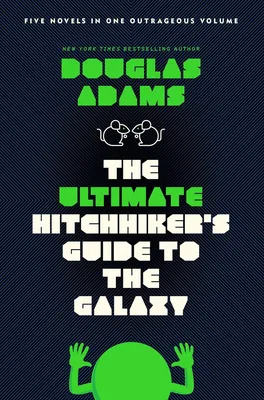
Start with The Hitchhiker's Guide to the Galaxy. Every single mention in my research points there, and the rare dissenter doesn't exist. It's short, it moves fast, and it's genuinely funny — not "pretty funny for a sci-fi book" funny, but laugh-out-loud, read-a-passage-aloud-to-whoever-is-nearby funny. If British wit doesn't land for you at all, you'll know within twenty pages and you've lost nothing. But most people don't have that problem.
After Hitchhiker's, the series continues through four more books (The Restaurant at the End of the Universe, Life, the Universe and Everything, So Long, and Thanks for All the Fish, Mostly Harmless) — and if you want something tonally different, Dirk Gently's Holistic Detective Agency is Adams doing detective fiction through the same absurdist lens. Don't sleep on Last Chance to See either, which is nonfiction: Adams touring the world to document endangered animals. It's one of the better books about conservation I've come across, and it's funny in a way that makes the sadness hit harder.
Similar Authors
The name that comes up most in the same breath as Adams is Terry Pratchett — different flavor of British wit, fantasy instead of sci-fi, but a similar sense that humor and genuine insight aren't in conflict. John Scalzi gets mentioned too, particularly Starter Villain, for readers who want modern comedic sci-fi with some of that same energy. Andy Weir (The Martian, Project Hail Mary) shares the comedy-sci-fi space but skews harder on the science and lighter on the philosophical absurdism. If you want dry humor in nonfiction, Bill Bryson's name came up in the same thread as Adams' Last Chance to See, and that comparison holds up.