Book recommendations, reviews, and reading lists.


Greg Bear
1 book on Read & Recommend
Writing Style
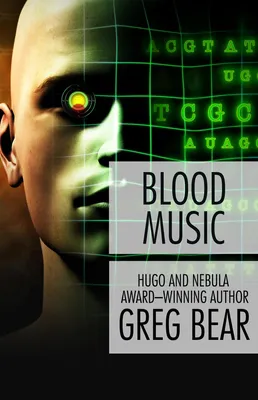
Greg Bear wrote science fiction that operated on a scale most authors wouldn't attempt. His signature move was taking a single scientific concept -- nanotechnology, accelerated evolution, pocket universes -- and pushing it to its absolute logical extreme until the story buckled under the weight of its own ideas in the best possible way. Blood Music starts with a rogue biologist smuggling engineered cells out of a lab and ends with the complete transformation of North American biomass. That's the kind of escalation Bear dealt in. His prose was workmanlike rather than lyrical, but that actually served the material. He wasn't trying to dazzle you with sentences; he was trying to make you feel the vertigo of concepts too large to hold in your head. His megastructure fiction -- the Way series starting with Eon -- built artificial environments so vast and strange that readers still bring them up whenever someone asks for "mysterious structures to explore" books.
Where to Start
Blood Music is my recommendation for a first Greg Bear book. It's short, it's relentless, and it shows up in virtually every Reddit thread about sci-fi horror, techno-thrillers, and transformation fiction. People describe it as unputdownable, and the premise -- biological cells that develop intelligence -- lands somewhere between Michael Crichton and cosmic horror. If you want something with more scope and world-building, Eon is the move. It's a Cold War-era story about a hollowed-out asteroid that turns out to contain an infinite corridor, and it's the book that cemented Bear as a big-ideas heavyweight. The Forge of God is the third pillar -- an alien invasion story that readers consistently put on "must-read sci-fi" lists alongside Niven and Pournelle's The Mote in God's Eye.
Similar Authors
Bear was part of "The Killer Bs" -- a group that included David Brin, Gregory Benford, and Stephen Baxter, all writing large-scale hard SF around the same era. If you like Bear's sense of cosmic scale, Baxter's Xeelee Sequence and Benford's Galactic Center saga scratch the same itch. Arthur C. Clarke's Childhood's End is a frequent companion recommendation alongside Blood Music for its similar trajectory of humanity hitting a wall of incomprehensible change. For the biological horror angle, Michael Crichton's techno-thrillers share Bear's fascination with science escaping containment, though Crichton keeps things tidier. Peter Watts brings a similar willingness to let hard science get genuinely unsettling.