Book recommendations, reviews, and reading lists.

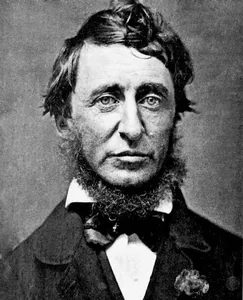
Henry David Thoreau
1 book on Read & Recommend
Writing Style
Thoreau writes like someone who has genuinely stopped caring what you think — not in a performative way, but because he's too busy watching a pond. Walden is part journal, part philosophical provocation, part dry comedy about how absurd it is that we work ourselves to death acquiring things we didn't need. Readers reach for the "quiet desperation" quote so often it's become a kind of shorthand, but it lands because it's true: he diagnosed something about modern life in 1854 that hasn't stopped being accurate. His essays move between close observation of the natural world and sweeping moral argument, sometimes in the same sentence.
What makes him distinctive is the combination of radical simplicity and genuine wit. He's not a miserable ascetic — there's real pleasure in his prose, a satisfaction in noticing things carefully. Readers who expect austere preachiness are usually surprised by how alive the writing is.
Where to Start
Walden is the obvious entry point and also genuinely the right one. It's not a survival guide or a back-to-the-land manifesto — it's a sustained argument for questioning whether the life everyone around you is living is actually the one worth living. Readers in their twenties who feel the pressure of "success" crushing them tend to find it at exactly the right moment. Don't read it as instruction; read it as permission.
For a shorter introduction, his essay Civil Disobedience is around 30 pages and has arguably changed the world more than most books ten times its length. If you want to understand why Thoreau keeps getting cited across politics, environmentalism, and philosophy, that's where to start.
Similar Authors
Readers who reach for Thoreau also tend to reach for Jon Krakauer (Into the Wild, Eiger Dreams) for the wilderness-as-philosophy angle, and Robert Pirsig for the same impulse to drop out and think through everything from scratch. Robin Wall Kimmerer gets recommended alongside him for nature writing that carries real moral weight. Viktor Frankl and Hermann Hesse come up in the same threads — the shared thread being writers who ask what a life is actually for.