Book recommendations, reviews, and reading lists.

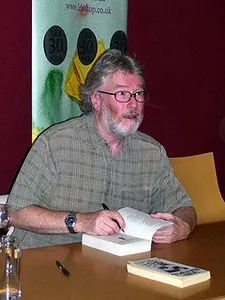
Iain Banks
1 book on Read & Recommend
Writing Style
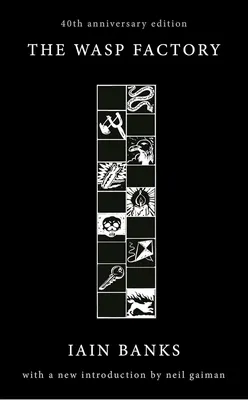
Banks operated as two authors in one. Under his own name, he wrote literary fiction that leaned hard into the disturbing and the surreal — The Wasp Factory remains one of the most polarizing debut novels in modern fiction, described by readers as "weird," "darkly funny," and genuinely hard to categorize. As Iain M. Banks, he built the Culture series, a sprawling space opera set in a post-scarcity civilization run by superintelligent AIs. What connects both halves of his work is a willingness to pull the rug out from under you. Use of Weapons in particular gets praised for a narrative structure that weaponizes its own timeline, delivering a final reveal that reframes everything before it. Readers consistently note that his books reward rereading — one commenter described going back to the Culture novels throughout their life and finding something different each time.
Where to Start
The Reddit consensus splits along a clear line. For his science fiction, Use of Weapons is the most passionately recommended Culture novel — it landed at number four on a ranked list of the best sci-fi novels ever, with a score of 181 in a "single best sci-fi novel" thread. Some readers find its nonlinear structure challenging in the early chapters, but those who push through tend to rank it among the all-time greats. The Player of Games is the more common entry point for the Culture series if you want something more accessible before tackling Use of Weapons. Matter is the pick for readers drawn to megastructure fiction — it comes up whenever someone asks for books about people surviving in vast constructs they don't understand. For his literary fiction, The Wasp Factory is the clear starting point, and it shows up whenever anyone asks for books that feel genuinely unlike anything else.
Similar Authors
I see Banks's Culture novels recommended alongside Alastair Reynolds for similarly grand-scale hard SF and Becky Chambers for a warmer but equally thoughtful take on post-scarcity societies. Peter Hamilton comes up for readers wanting that same epic scope with more military edge. On the literary fiction side, The Wasp Factory occupies a strange niche — readers who love it tend to also gravitate toward transgressive, hard-to-classify novels by writers like Chuck Palahniuk or early Ian McEwan. For the megastructure and sense-of-wonder elements in Matter and The Algebraist, readers point toward Larry Niven's Ringworld and Arthur C. Clarke's Rendezvous with Rama.