Book recommendations, reviews, and reading lists.

James Crumley
1 book on Read & Recommend
What Readers Say
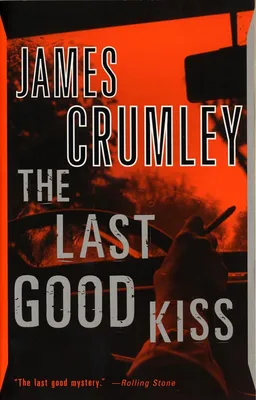
When I comb through reader discussions, a passionate, almost evangelical tone surrounds James Crumley. The faith is simple: “Start with The Last Good Kiss and spread the gospel.” That one comment from a Reddit thread asking for gritty detective books captures the consensus. Readers describe his style as tough, lyrical, and uncompromisingly dark—a kind of poetic brutality that lingers. He’s slotted firmly into the noir pantheon alongside Raymond Chandler, Jim Thompson, and James Ellroy. The praise centers on his ability to fuse hard-boiled detective tropes with a raw, literary edge. I haven’t come across much criticism in these mentions; instead, the conversation is all about evangelizing his work to anyone who craves a truly gritty reading experience. For fans of the genre, Crumley is often the answer to “What do I read after I’ve finished all the classic noir writers?”
Where to Start
The answer is unanimous: The Last Good Kiss. Every time his name comes up, it’s the book readers thrust forward first. It’s the opening line that hooks them, and the rest of the novel doesn’t let go. It’s a masterclass in voice and atmosphere. If you’re new to Crumley, I’d follow that thread. This isn’t a writer with a dozen divergent entry points; the community treats The Last Good Kiss as the gateway, the perfect distillation of his style. For readers who may want a slightly different flavor, you could explore his later work, but you’d be hard-pressed to find a better introduction. Start here, and if the gospel grabs you, the rest of his bibliography will follow naturally.
Reading Context
Crumley occupies a revered corner of the crime fiction world, one where the blacktop meets high literary ambition. He’s constantly mentioned in the same breath as the giants of noir: Chandler, Ellroy, Jim Thompson, and Lawrence Block. He fits as a bridge between the classic hard-boiled era and the modern, even darker sensibilities of writers like S.A. Cosby. I’ve seen his work appear on lists of essential noir alongside The Alienist by Caleb Carr and Jo Nesbø’s bleak thrillers, but Crumley’s American West setting and his boozy, battered detectives feel uniquely his own. There aren’t any major film adaptations or cultural moments that crop up in these discussions—his legacy is built purely on the page-to-page fervor of his readers. If you’re building a shelf of essential crime fiction, he’s the guy you put between Chandler and Ellroy, a writer who pushed the detective novel into darker, more existential territory without losing the propulsive grit of a pulp paperback.