Book recommendations, reviews, and reading lists.

James S.A. Corey
1 book on Read & Recommend
Writing Style
James S.A. Corey (the pen name for Daniel Abraham and Ty Franck) writes space opera that refuses to let humanity off the hook. The Expanse series starts with a colonized solar system and immediately makes clear that expanding into space didn't fix Earth's politics, poverty, or tribalism — it just gave us more room to repeat our mistakes. Readers consistently describe the series as having cyberpunk's DNA inside a space opera frame: class warfare between Earth, Mars, and the exploited Belt runs through every book, and corporate manipulation is never far from the plot. The Belter creole slang is its own thing — it hooks people or it doesn't, but those it hooks tend to stay hooked through all nine books.
The writing is propulsive and clean. It's the kind of series where chapters end in ways that make putting the book down feel unreasonable. The TV adaptation is unusually faithful, but readers who come to the books from the show still report the novels have more depth — more political texture, more interiority.
Where to Start
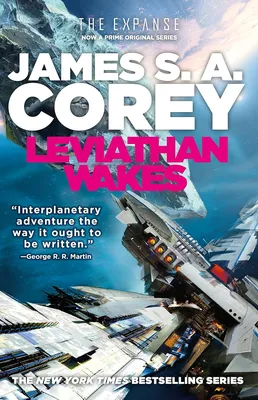
Leviathan Wakes is the only entry point that makes sense. It's a complete story on its own — a hardboiled detective plot and a sci-fi thriller grafted together — and it establishes the world without overwhelming you with nine books of lore. The first half reads almost like a noir mystery set in an asteroid belt station; the second half pivots hard into something else entirely. If the Belter slang clicks for you by chapter three, you're probably going to read all of them.
The Mercy of Gods is a standalone (so far) that works as an alternate entry point for readers who want aliens interacting with humans in a more immediate way — it's a newer series under the same pen name, less politically sprawling, more contained.
Similar Authors
The Expanse threads get cross-pollinated with recommendations for Dan Simmons (Hyperion Cantos), Iain M. Banks (Look to Windward), and Frederik Pohl (Gateway) — all large-canvas space opera with something to say about civilization. For the cyberpunk-adjacent DNA, readers in the same threads mention William Gibson, Richard K. Morgan, and Neal Stephenson. Pierce Brown's Red Rising shows up as a faster, more YA-adjacent option for readers who want the class-warfare politics with more action.