Book recommendations, reviews, and reading lists.

Jane Austen
1 book on Read & Recommend
What Readers Say
People who come to Jane Austen expecting dull dances and decorous romance tend to walk away shocked by how funny she is. Readers describe her as "a surprising riot" — someone who turns penniless spinsters, overbearing families, and limited female options into material for razor-sharp social comedy. The wit is the point. The marriages are almost secondary. What readers keep returning to is the sense that Austen understood people — their self-deceptions, their social maneuvering, their capacity to be both ridiculous and sympathetic — with a precision that hasn't dated at all.
Pride and Prejudice is the title that comes up most, and for good reason: its opening line ("It is a truth universally acknowledged...") is one of the most quoted first sentences in the English language. But the conversation around it has shifted. More readers now argue that Emma is the better novel — "everything we associate with Austen but on steroids," in one reader's words — and Persuasion draws the most passionate loyalty. One reader described putting off Emma for years, finally reading it, and immediately regretting the wait. Another admitted they've held onto Pride and Prejudice since high school and still haven't let go, sixteen years later. That kind of staying power is hard to argue with.
The criticism that does surface — Charlotte Brontë famously called Austen's world "a carefully fenced, highly cultivated garden" with no open country — tends to get acknowledged and then set aside. Even Mark Twain, who claimed he wanted to beat Austen with her own shin-bone, apparently read Pride and Prejudice multiple times. Readers find that telling.
Where to Start
There's a genuine split here. Pride and Prejudice is the default starting point and probably still the right one for most readers — it's the most immediately pleasurable, the most socially legible, and Elizabeth Bennet is a protagonist worth spending time with. But a real contingent pushes Emma as the better introduction, especially for readers who want something that rewards close attention.
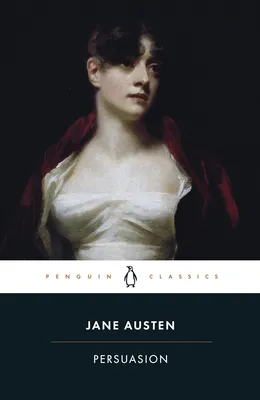
For anyone who wants to understand why Austen still matters as a portrait of women's lives — not just as romance — Persuasion is the argument. Anne Elliot is quieter and more interior than Elizabeth Bennet, but the novel's emotional stakes are higher, and the famous letter Wentworth writes near the end ("You pierce my soul. I am half agony, half hope.") lands differently than anything else in the Austen catalogue. Readers looking for Austen's wilder side should try Lady Susan or Northanger Abbey — both shorter, both sharper in different ways, and Lady Susan in particular runs entirely on gossip and scheming correspondence. Mansfield Park and Sense and Sensibility round out the canon and have their defenders, but most readers start somewhere else.
Reading Context
Austen regularly appears alongside the Brontë sisters, George Eliot, and Edith Wharton in lists of essential women writers — but the comparisons only go so far. Readers who try to position her within that group often end up noting that Austen really is "in a world of her own." The closest comparison that comes up is Terry Pratchett: both writers are nominally working in light genres (regency comedy, fantasy satire) while actually doing something much more precise about society and human nature, and both are funnier than their literary reputations sometimes suggest.
The adaptations have kept Austen's world visible in ways that work both for and against the books. The BBC Pride and Prejudice adaptation (1995) is so embedded in how readers picture Darcy that it colors the reading experience, and the Bridgerton comparison — useful for bringing in new readers — also tends to flatten what Austen is doing. Several mentions specifically push back on the idea that Austen is just "the dark side of Bridgerton." The penniless spinsters, the family financial pressures, the girls ruined by predatory men, the women entering loveless marriages for survival — that material is there in every novel, not as melodrama, but as the ground everything else is standing on.