Book recommendations, reviews, and reading lists.

Kobo Abe
1 book on Read & Recommend
What Readers Say
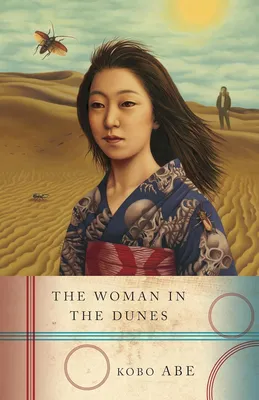
I find that readers consistently describe Kobo Abe’s style as a seamless, unsettling blend of the surreal and the naturalistic. His most discussed work, The Woman in the Dunes, is often praised for beginning in a grounded, almost mundane reality—a man misses a bus—and then spiraling into an “increasingly nightmarish” scenario that never quite abandons its eerie realism. The result is an atmosphere that feels both claustrophobic and philosophically vast, a quality that prompted one reader to call it “an utter classic” and another to emphasize its “great existential read” status. Praise is nearly uniform among the mentions I’ve seen; the book inspires immediate, enthusiastic agreement whenever it’s suggested, with multiple people jumping in to say they thought of it instantly. There isn’t a whisper of criticism in these mentions, only a shared reverence for how Abe traps his characters—and his readers—in a hole of psychological dread.
Where to Start
The entry point could not be more unanimous: I’d push you straight toward The Woman in the Dunes. This is the novel that seems to live rent-free in readers’ minds, the one they default to when anyone asks for a story about being stuck, about existential loops, or about the nightmarish overlap of the ordinary and the absurd. If you’re the kind of reader who loves a premise that is both physically and metaphysically confining, this is your book. For those who might want to sample Abe’s wider oeuvre, the only other clue I have is from a reader who simply says “all his books are great,” so once you’ve finished the classic, I’d trust that reassurance and explore whatever else catches your eye—but there’s no denying The Woman in the Dunes is the gateway almost everyone recommends first.
Reading Context
Within the landscape of Japanese literature, Kobo Abe occupies a space where the surrealist tradition collides with raw, naturalistic detail, placing him in good company alongside writers like Yukio Mishima or Kenzaburō Ōe, though his tone is distinctly his own. Readers often reach for comparisons that highlight this blend: one memorable mention links The Woman in the Dunes to a SpongeBob SquarePants episode about being perpetually stranded, which captures Abe’s knack for making profound existential dread feel immediately, even absurdly, recognizable. Culturally, the novel’s reach extends well beyond the page thanks to its famous film adaptation, a touchstone that multiple readers bring up as adding to its classic status and perhaps cementing the imagery of that sandy prison in the collective imagination.