Book recommendations, reviews, and reading lists.

Marshall McLuhan
1 book on Read & Recommend
What Readers Say
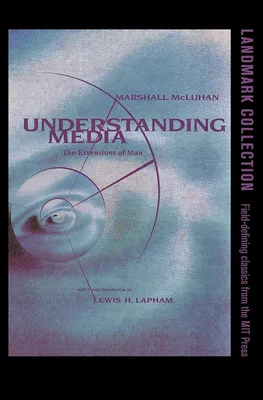
Marshall McLuhan is the most quoted and least understood thinker on this subject. "The medium is the message" appears constantly in discussions of media and propaganda — and then gets explained incorrectly just as often. The actual argument is stranger and more interesting: that the form through which content is delivered shapes consciousness more deeply than the content itself. Television doesn't just carry ideas; it changes how we process ideas. The internet doesn't just distribute information; it restructures attention. McLuhan was writing this in 1964, in Understanding Media, and he was describing something that wouldn't fully land until social media arrived and made his predictions look like reporting.
Reddit recommends him most often in media literacy and propaganda threads, usually alongside Neil Postman — who extended and popularized McLuhan's ideas for a general audience in Amusing Ourselves to Death. The Mechanical Bride also gets recommended specifically for younger readers or classrooms, praised for its essay format and visual density, which makes it more immediately accessible than Understanding Media. His writing is not easy, but the difficulty is a specific kind: he writes in associative, aphoristic bursts rather than linear argument, which is either maddening or electrifying depending on what you're looking for.
Where to Start
The Mechanical Bride (1951) is the most accessible entry point — short essays analyzing advertising and popular culture with illustrations, written before his ideas became as abstract as they did later. Understanding Media (1964) is the major work and the one that actually contains the argument, but it rewards a second read more than most books. The Medium Is the Massage (1967, not a typo) is a collaboration with designer Quentin Fiore and is more visual than textual — a useful companion piece rather than a standalone book.
Reading Context
McLuhan and Neil Postman are the natural pair — Postman translated McLuhan's framework into more linear prose and applied it specifically to television, so readers who bounce off McLuhan often find Postman more approachable and then circle back. Walter Ong's Orality and Literacy covers related territory with more scholarly rigor. For readers coming from the propaganda angle specifically, McLuhan sits upstream of everyone else on the subject — he's asking why certain media environments make certain kinds of manipulation so much easier to execute, which is the question that makes Cialdini and Arendt click into place.