Book recommendations, reviews, and reading lists.

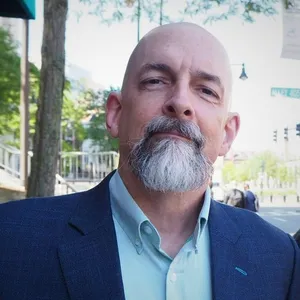
Neal Stephenson
2 books on Read & Recommend
Writing Style
Neal Stephenson writes big, ambitious, idea-dense novels that demand your full attention. His books dive deep into subjects like cryptography, linguistics, philosophy, and nanotech — and he expects you to keep up. Readers consistently describe his work as brilliant but challenging, the kind of fiction where you'll learn something genuinely new about the world on every other page.
The one criticism that comes up over and over? His endings. Stephenson builds sprawling, intricate narratives and then wraps them up abruptly, almost like he hit a page count and stopped. It's a running joke in sci-fi circles — one reader put it perfectly: expect "at least 80% of a novel. Don't expect an end." If you can make peace with that, you're in for some of the most inventive sci-fi being written.
His earlier novels like Snow Crash and Zodiac are noticeably faster-paced and more accessible than his later doorstoppers like Cryptonomicon and Anathem.
Where to Start
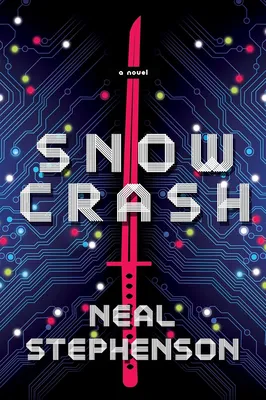
The consensus entry point is Snow Crash — fast, funny, and self-aware. The protagonist delivers pizza for the Mafia, and the virtual reality internet he inhabits became the blueprint for what Silicon Valley now calls "the metaverse." It reads like cyberpunk satire, which makes it far more approachable than Stephenson's denser work.
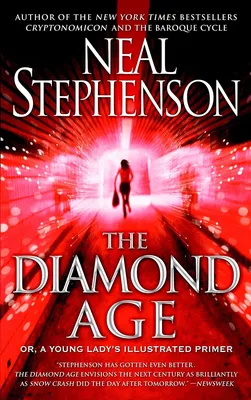
The Diamond Age is the most common second recommendation — quieter and deeper, centered on education and class. After those two, readers split: Cryptonomicon for historical fiction fans who want a 900-page epic about codebreaking, or Anathem for anyone with a philosophy background who wants something truly unique. Seveneves gets the nod from hard sci-fi fans wanting plausible near-future scenarios.
Similar Authors
Readers consistently place Stephenson alongside William Gibson as the two pillars of cyberpunk. Beyond that, he gets recommended with Andy Weir for brainy science-forward storytelling, Adrian Tchaikovsky for ambitious speculative concepts, and Vernor Vinge for boundary-pushing sci-fi. Fans of Bruce Sterling and Charles Stross also tend to be Stephenson readers — they share that fascination with technology's second-order effects on society.