Book recommendations, reviews, and reading lists.

Osamu Dazai
2 books on Read & Recommend
What Readers Say
When I read through Reddit threads, Dazai’s name surfaces most often in conversations about raw, psychologically relentless fiction. Readers repeatedly link him to Japanese nihilism—one user, deep in a discussion about Yukio Mishima, asked, “Do you also enjoy Osamu Dazai?” as if the two writers are natural companions in despair. The overwhelming consensus is that No Longer Human is his landmark work, but I also spot meaningful pushback. A reader on r/truelit admitted it “isn’t his best work” while acknowledging the novel’s “suicide note” quality gives it a haunting literary weight. That tension runs through a lot of the mentions: people are drawn to the confessional voice, the bone-deep alienation, but sometimes feel the bleakness tips into suffocation. Others lament that a trove of his short fiction stays locked in Japanese, leaving English-language readers guessing at what they’re missing.
The recommendations I see often situate Dazai next door to existentialist fiction. After someone shared a love for Kafka on the Shore and Crime and Punishment, a reply immediately suggested No Longer Human. So readers who appreciate Dostoevsky’s psychological unraveling or Murakami’s strange loneliness tend to find Dazai a natural fit—only with a more intimate, almost diaristic ache. For those it clicks with, his writing doesn’t just tell a story; it feels like he’s handed you the private pages he never wanted you to read.
Where to Start
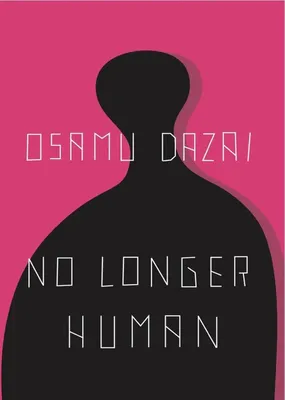
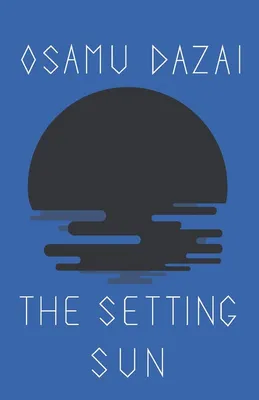
Nearly every mention pushes newcomers toward No Longer Human, and I think that’s the right instinct. It’s a first-person plunge into a man so disconnected from society that he sees himself as disqualified from humanity, and it appears in more recommendation threads than any of his other books. If that laser focus on self-loathing sounds like too much, I’d point to The Setting Sun instead—still suffused with melancholy, but framed through an aristocratic family’s collapse in post-war Japan, offering more social texture and a broader cast. Since so many of his strongest short stories remain untranslated, the choice really comes down to these two. Start with No Longer Human for the pure, distilled Dazai; try The Setting Sun if you want that same sorrow woven into a changing nation’s story.
Reading Context
In the landscape of 20th-century Japanese literature, Dazai belongs to the canon you’ll see grouped with Natsume Soseki, Junichiro Tanizaki, and especially Yukio Mishima. When readers talk about post-war identity crises or nihilism, they frequently name Dazai and Mishima in the same breath, contrasting Dazai’s raw, self-deprecating intimacy with Mishima’s more dramatic, aestheticized darkness. Western comparisons surface too: No Longer Human regularly gets recommended to fans of Camus’s The Stranger or Dostoevsky’s Notes from Underground. The inescapable shadow over his work is the author’s own life—multiple suicide attempts, culminating in the fatal one just after he finished No Longer Human. Many readers can’t fully separate the art from that biography, and maybe that’s the point; his fiction bleeds in a way that makes you feel the person behind the page.