Book recommendations, reviews, and reading lists.

Shusaku Endo
1 book on Read & Recommend
What Readers Say
When I see readers talk about Endo, they fixate on his unflinching look at faith under pressure. He’s not interested in heroic believers—he's fascinated by the ones who break, who step on the fumie, who hear only silence in return for their prayers. Readers describe his prose as quiet but devastating, a slow burn that leaves you hollowed out. There's a sense when I read through the mentions that people don't just finish Endo's books—they wrestle with them, sometimes for years. The only title that surfaces with any consistency is Silence, and the conversations around it are heavy with the weight of genuine spiritual crisis. Nobody calls him an easy read. They call him necessary.
The common praise I pick up on is how deeply he interrogates cultural and spiritual collision. Readers point out that Endo, as a Japanese Catholic, occupied a unique and lonely position, and that tension bleeds into every page. He’s not offering easy answers or comforting allegories; he’s presenting a raw, flesh-and-blood struggle. The criticism, when it surfaces implicitly, is that his work demands a lot from you—emotionally, spiritually. It’s not the kind of literature you casually pick up. The silence in the mentions around his other titles tells me that for many English-language readers, Silence so completely defines his legacy that exploring further becomes daunting, or perhaps simply feels unnecessary after such a profound encounter.
Where to Start
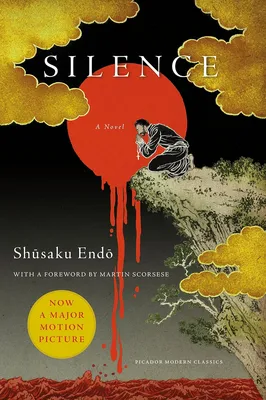
There’s really only one place readers point to, and it’s a resounding one: Silence. This is the book I see mentioned every single time Endo’s name comes up, and for good reason. It’s the perfect distillation of his central themes: the brutality of 17th-century Japan’s persecution of Christians, the agonizing silence of God in the face of suffering, and the complex, messy psychology of apostasy. If you only read one Endo novel—and for many, I gather that's the case—this is the one that will leave its mark on you. It’s for the reader who isn't afraid of deep theological and moral ambiguity.
In my reading of the mentions, there isn’t a clear secondary entry point celebrated by a chorus of voices. The single-minded focus on Silence suggests that for a different kind of reader, the alternative might simply be to step away from Endo altogether. If you need a plot with momentum or a resolution that feels satisfying in a traditional sense, this might not be your author. But if Silence sounds too punishing and you still want to engage with Endo’s voice, I’d say you’re venturing into less-charted territory where you’d be relying less on broad reader consensus and more on your own instinct to pull another of his titles from the shelf.
Reading Context
I see Endo placed firmly within the pantheon of essential 20th-century Japanese literature. In the lists where Silence appears as a must-read classic, it’s alongside heavyweights like Yukio Mishima, Yasunari Kawabata, Junichiro Tanizaki, and Natsume Soseki. But Endo’s thematic territory sets him apart from that group. Where Mishima explored aesthetics and nationalism, and Kawabata captured fleeting beauty, Endo brought a distinctly Christian existential crisis into a literary tradition shaped by Buddhism and Shinto. He’s the outlier in that list, and his unique perspective is exactly what earns him his place. One intriguing connection that surfaced is a mention alongside Donna Tartt, which I find fascinating—it hints at a shared sensibility, perhaps in their exploration of guilt, moral complexity, and a certain dark, interior psychological drama.
Of course, no conversation about Endo in the modern era can escape the shadow of Martin Scorsese’s film adaptation of Silence. While the mentions I have here don't dive into the film, it’s a massive cultural moment that brought a difficult, decades-old novel roaring back into the public consciousness. For many readers, I suspect the film serves as either a gateway to the book or the final visual punctuation on a story that had already haunted them. The central question Endo poses—where is God when we suffer?—is universal, but his framing of it within the specific historical crucible of Edo-period Japan makes him an indispensable voice, one that bridges worlds and refuses to smooth over the friction.