Book recommendations, reviews, and reading lists.

Svetlana Alexievich
1 book on Read & Recommend
Writing Style
Alexievich writes oral history — she collects hundreds of first-person accounts and weaves them into something that reads like documentary but hits like fiction. Readers describe her work as "the darkest thing I've ever read" while also calling it "incredibly engaging." That tension is the point. She's not summarizing events from above; she's handing you the raw testimony of people who lived through things most of us can barely imagine — Soviet women fighting on the Eastern Front, survivors of Chernobyl, ordinary people watching the USSR collapse around them. The format strips out her own voice almost entirely, which makes it more devastating, not less.
What she does that Erik Larson can't is get out of the way. Because these events are recent enough for direct interviews, Secondhand Time and Voices from Chernobyl are entirely first-person accounts — no narrator stepping in to frame the horror. Readers who usually bounce off nonfiction find themselves finishing these books in a sitting.
Where to Start
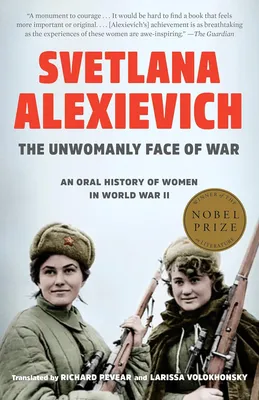
The Unwomanly Face of War is the most recommended entry point — over two hundred personal accounts from women who fought on the Eastern Front in WWII. It's the book that made her reputation and the one most likely to convert someone who's skeptical of oral history as a format. If you want something closer to living memory, Secondhand Time: The Last of the Soviets gets strong recommendations as a way to actually understand both communism and modern Russia — one reader called it the book that "opened my eyes" to that whole era.
Voices from Chernobyl is the basis for the HBO series if you want a more contained entry point, and it's frequently mentioned alongside the others as equally excellent.
Similar Authors
Erik Larson comes up as a comparison point for readers who want narrative nonfiction that covers history through human stories — though Alexievich is noted as more immersive because she uses only direct accounts. In literary fiction circles, she gets mentioned alongside Olga Tokarczuk, Annie Ernaux, and Elfriede Jelinek as part of the same tradition of European literary writing that rewards serious readers.