Book recommendations, reviews, and reading lists.

Walter Lippmann
1 book on Read & Recommend
What Readers Say
Walter Lippmann's Public Opinion (1922) is where the modern study of media and propaganda begins, and it's on this subject's reading lists for that reason rather than because it's the most readable entry point. He introduced the concept of the "pseudo-environment" — the gap between the world as it actually is and the picture of it that exists inside people's heads, shaped by selective information, language, and the limits of what any individual can directly observe. That gap is where propaganda lives and has always lived, and Lippmann was the first person to map it systematically.
He was a journalist and a political commentator, not an academic, and the book reads like a serious attempt to understand something rather than to prove a thesis. His tone is more sympathetic to the problem of managing a complex society than later critics like Chomsky — who explicitly pushes back on Lippmann's conclusions — which gives the work a different flavor than most of what surrounds it in this space.
Where to Start
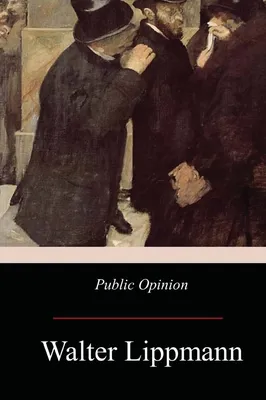
Public Opinion (1922) is the major work and the starting point. It's in the public domain and widely available. The Phantom Public (1925) is a shorter follow-up where he extends and in some ways walks back the implications of Public Opinion — worth reading if the first one lands. His work is most useful as historical and intellectual context for understanding why later thinkers like Chomsky and McLuhan were arguing against a specific set of assumptions.
Reading Context
Lippmann is the source that everyone else in the propaganda canon is either building on or arguing against. Chomsky and Herman's Manufacturing Consent is in explicit dialogue with his framework — understanding Lippmann makes that book's critique land harder. McLuhan's analysis of media environments is also, in part, a response to the pseudo-environment problem Lippmann identified a generation earlier.