Book recommendations, reviews, and reading lists.

14 Cyberpunk Books That Feel Like Neon-Soaked Nightmares
2026-03-18 · Written by Josh
Jack In. The Future Already Happened and It's Worse Than You Thought.
Cyberpunk has always been about one thing: what happens when technology outpaces humanity's ability to handle it. The neon is just decoration. Underneath the rain-soaked megacities and chrome prosthetics, the best cyberpunk fiction asks the same uncomfortable questions over and over — who owns your body, your data, your identity? And what happens when the answer is "not you"?
I went looking for the books that define this genre. Not just the classics everyone name-drops, but the ones that readers actually finish and can't stop thinking about. Some of these invented cyberpunk. Some of them are reinventing it right now. All of them feel like staring into a screen at 3 AM and seeing something staring back.
1. Neuromancer by William Gibson
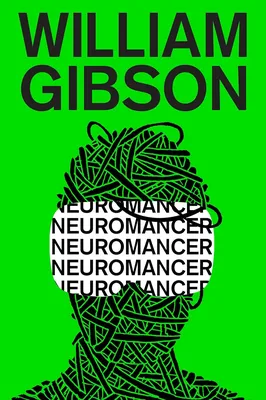
The one that started it all. Published in 1984, before the internet existed for most people, and somehow Gibson predicted everything — cyberspace, hacking culture, corporate surveillance, the merging of human consciousness with digital networks. Case is a washed-up hacker hired for one last job, and the world he moves through feels less like science fiction every year. The prose is dense and hallucinatory, which puts some readers off, but if you click with Gibson's rhythm, nothing else in the genre comes close.
Who it's for: Anyone who wants to read the book that invented cyberpunk and still hasn't been surpassed.
2. Snow Crash by Neal Stephenson
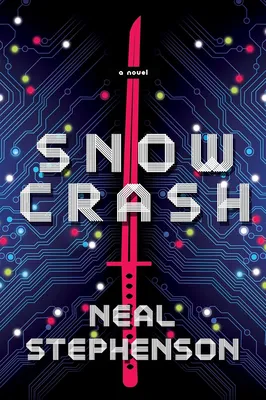
If Neuromancer is cyberpunk played straight, Snow Crash is cyberpunk with a grin. The protagonist is literally named Hiro Protagonist. He delivers pizza for the Mafia. The internet is a 3D virtual world called the Metaverse. A new drug called Snow Crash is crashing both the virtual and physical worlds simultaneously. Stephenson wrote this in 1992 as satire. Then Silicon Valley read it and tried to build it. The fact that Mark Zuckerberg named his company Meta after this book's Metaverse is either the greatest literary legacy or the most depressing one.
Who it's for: Readers who want their dystopia funny, fast, and uncomfortably prophetic.
3. Do Androids Dream of Electric Sheep? by Philip K. Dick
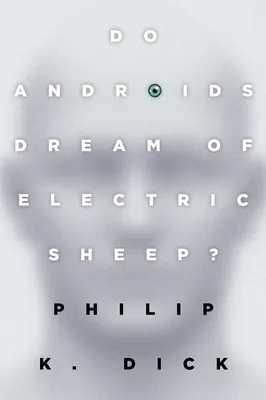
The novel that became Blade Runner, though the book and the movie are very different experiences. Dick's version is stranger, sadder, and more interested in the question of empathy than action. In a post-nuclear world where most animals are extinct, Rick Deckard hunts down rogue androids. But the line between human and artificial is so blurred that hunting them starts to feel like murder. Dick wrote this in 1968 and the questions it raises about consciousness and authenticity have only become more urgent.
Who it's for: Readers who want their cyberpunk philosophical and deeply melancholic.
4. Altered Carbon by Richard K. Morgan
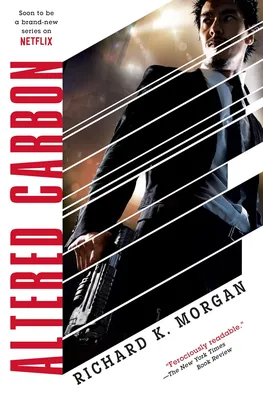
In the future, human consciousness can be stored on a chip and transferred between bodies. Death is temporary for the rich. Permanent for everyone else. Takeshi Kovacs wakes up in a new body on Earth, hired to solve a murder that the victim himself claims didn't happen. Morgan writes action like someone who understands violence — it's fast, brutal, and has consequences. The worldbuilding is immaculate, and the noir detective structure gives the cyberpunk setting a human-scale story to anchor it.
Who it's for: Readers who want Blade Runner's aesthetic with a hardboiled detective plot.
5. The Expanse Series by James S.A. Corey
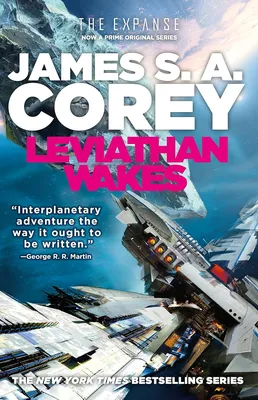
Technically space opera, but the early books have cyberpunk's DNA running through them. Humanity has colonized the solar system but hasn't solved any of its problems — Earth is overpopulated, Mars is militarized, and the Belt is exploited. The class warfare, corporate manipulation, and questions about what technology does to human society are pure cyberpunk, just set on a larger canvas. Start with Leviathan Wakes and see if the Belter slang hooks you.
Who it's for: Readers who want cyberpunk themes scaled up to the solar system.
6. The Murderbot Diaries by Martha Wells
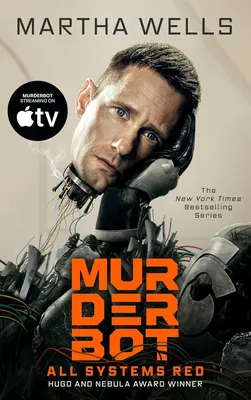
A security robot hacks its own governing module and gains free will. Instead of going on a rampage, it just wants to watch soap operas and avoid social interaction. Wells takes every cyberpunk trope about artificial intelligence and filters it through the most relatable narrator in science fiction. Murderbot is anxious, antisocial, deeply competent, and accidentally heroic. The novellas are short, addictive, and surprisingly emotional.
Who it's for: Introverts who've ever wanted a heavily armed robot to express their feelings for them.
7. Ready Player One by Ernest Cline
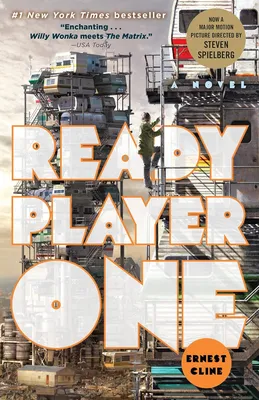
The year is 2045. The real world is a wasteland. Everyone lives in the OASIS, a virtual reality universe built by an eccentric genius who hid an Easter egg worth billions inside it. The hunt for the egg is a love letter to 1980s pop culture wrapped in a cyberpunk shell. Critics call it nostalgia bait, and they're not entirely wrong, but the book moves at a pace that makes it almost impossible to put down. Whether you love it or hate it usually depends on your tolerance for references.
Who it's for: Gamers and 80s kids who want a cyberpunk treasure hunt.
8. When Gravity Fails by George Alec Effinger
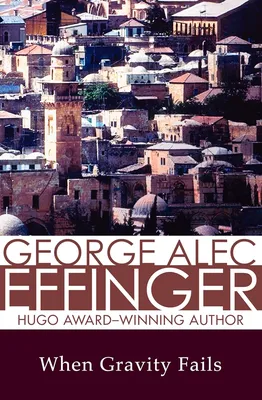
Cyberpunk, but set in a future Middle Eastern city instead of Tokyo or Los Angeles. Marid Audran is a hustler in the Budayeen, a walled-off district of bars, brothels, and black-market brain implants. When a serial killer starts working through the neighborhood, Marid is forced to accept the neural modifications he's always refused. Effinger brings a completely different cultural lens to cyberpunk, and the result feels fresh in a way that most Western-centric sci-fi doesn't.
Who it's for: Readers tired of cyberpunk's default Tokyo-or-LA setting.
9. The Diamond Age by Neal Stephenson
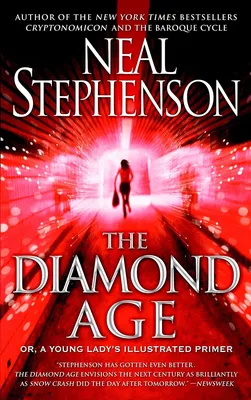
Stephenson's follow-up to Snow Crash is quieter but arguably deeper. A young girl from the underclass gets her hands on an interactive book designed to educate the daughters of the elite. The book — called A Young Lady's Illustrated Primer — becomes her teacher, protector, and window into a world she was never meant to access. It's cyberpunk about education, class, and what happens when transformative technology reaches the wrong hands. Or maybe the right ones.
Who it's for: Readers who want cyberpunk that's more interested in ideas than gunfights.
10. Cloud Atlas by David Mitchell
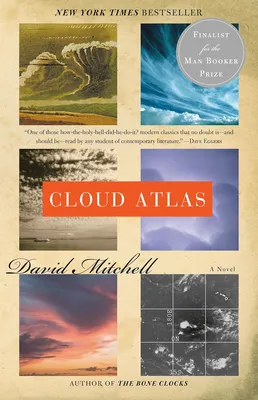
Not strictly cyberpunk, but the Neo Seoul chapters are some of the most vivid cyberpunk writing of the 21st century. A fabricant — a cloned server in a corporate fast-food chain — develops consciousness and becomes the catalyst for revolution. Mitchell nests this story inside five others spanning centuries, and the connections between them are part of the book's genius. Read it for the Neo Seoul sections; stay for the architecture of the whole thing.
Who it's for: Literary fiction readers who want cyberpunk as one layer of something much larger.
11. Yumi and the Nightmare Painter by Brandon Sanderson
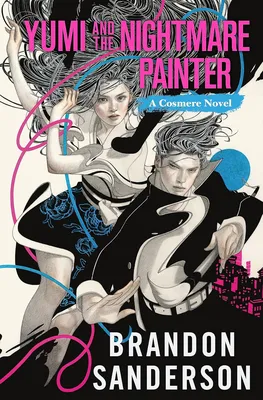
An unexpected entry from the fantasy heavyweight. Set in a world where a painter's nightmares literally manifest, this novella blends cyberpunk aesthetics with Sanderson's signature magic systems. The neon-lit city, the corporate structures, and the questions about identity and purpose all hit cyberpunk notes, even if the world runs on something closer to magic than technology. It's shorter and more intimate than Sanderson's usual epics.
Who it's for: Fantasy readers who want a cyberpunk-adjacent entry point.
12. Red Rising by Pierce Brown
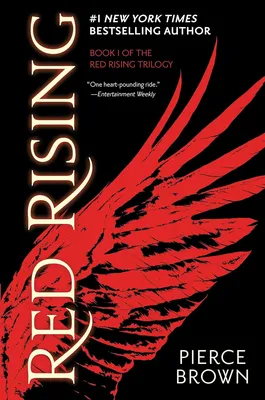
The solar system is controlled by a color-coded caste system. Golds rule. Reds mine. Darrow is a Red who infiltrates Gold society to tear it down from the inside. Brown writes action sequences like he's directing a blockbuster, but the class warfare and body modification themes are cyberpunk through and through. The series escalates dramatically — what starts as a contained survival story becomes a solar system-wide revolution.
Who it's for: Readers who want their cyberpunk themes wrapped in epic sci-fi action.
13. Immortal Longings by Chloe Gong
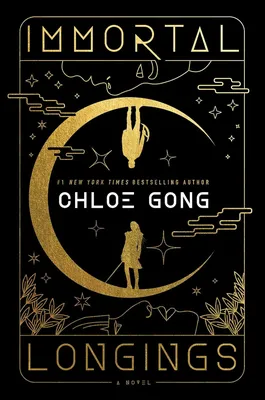
Set in a futuristic city where players compete in a televised death game by jumping between bodies. Gong blends cyberpunk aesthetics with wuxia-inspired martial arts and a romance that runs through the violence like a live wire. The body-hopping mechanic creates genuinely interesting questions about identity and attachment — how do you love someone whose face keeps changing?
Who it's for: Readers who want cyberpunk with romance, martial arts, and death games.
14. Count Zero by William Gibson
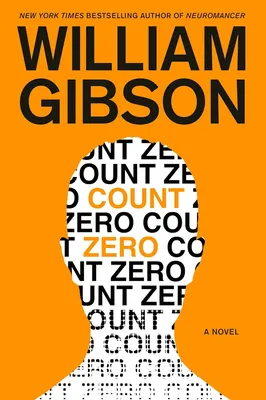
The middle book of Gibson's Sprawl trilogy is often overlooked in favor of Neuromancer, but many readers consider it the better novel. Three separate storylines — an art dealer, a hacker, and a mercenary — converge in a world where the AIs from Neuromancer have evolved into something resembling gods. Gibson's prose is more confident here, the world more fully realized, and the questions about artificial consciousness more pointed.
Who it's for: Readers who finished Neuromancer and want to go deeper into the Sprawl.
Boot Sequence
New to cyberpunk? Start with Snow Crash if you want something fun and fast, or Neuromancer if you want the real thing. If you're coming from fantasy, Yumi and the Nightmare Painter or Red Rising will ease the transition. And if you want the book that asks the hardest questions about what makes us human, Do Androids Dream of Electric Sheep? is still the answer nobody has improved on.
The future these books describe keeps getting closer. That's either exciting or terrifying, depending on which side of the corporate firewall you're standing on.
Continue Reading
Romance Books for Men (No Love Triangles, No Drama)
Romance recommendations for guys (and anyone else) who want a good love story without cheating, love triangles, or over-the-top drama. Just two real people figuring it out.
15 Sci-Fi Horror Books Where the Science Is the Monster
When the experiment goes wrong, the AI wakes up, or the DNA splices itself into something new — these are the books that turn science into nightmare fuel.