Book recommendations, reviews, and reading lists.

15 Sci-Fi Horror Books Where the Science Is the Monster
2026-03-18 · Written by Josh
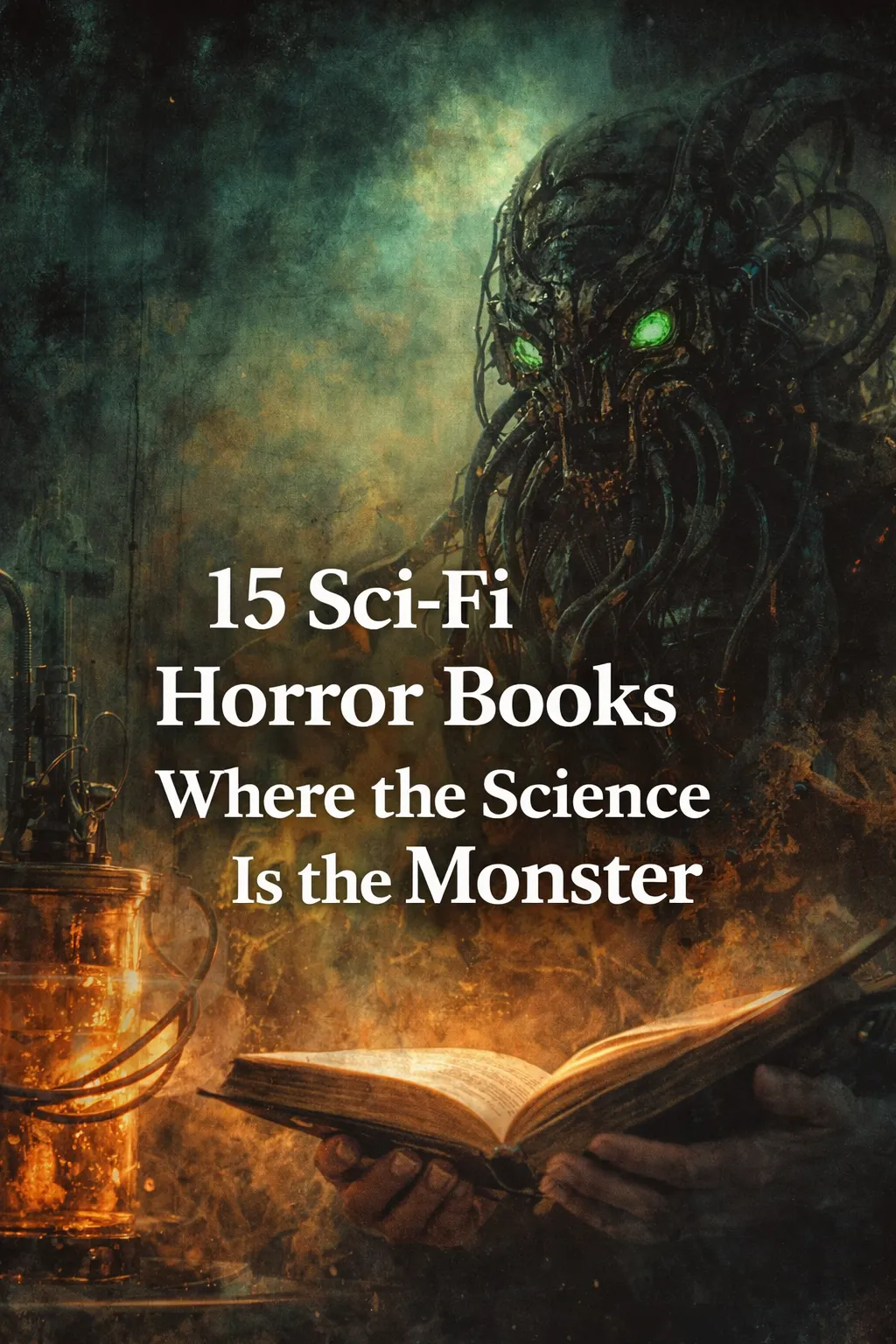
The Lab Is Open. The Lights Are Flickering. Nobody's Coming to Help.
Science fiction and horror have always been neighbors, but most people keep them in separate rooms. Sci-fi gets the clean white labs and hopeful astronauts. Horror gets the blood and the basements. The best books in this space refuse to separate them. They take real science — genetics, physics, deep-sea biology, artificial intelligence — and ask the question every horror reader secretly wants answered: what happens when it goes catastrophically wrong?
I dug through reader recommendations, cult followings, and the dusty corners of used bookstores to find the sci-fi horror novels that actually deliver on both halves of that genre mashup. These aren't books where a scientist happens to encounter a ghost. These are books where the science itself is the monster.
1. Jurassic Park by Michael Crichton
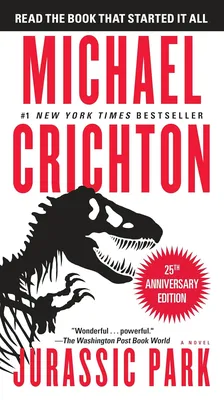
If you've only seen the movie, you're missing half the terror. Crichton's novel is darker, bloodier, and far more interested in the hubris of genetic engineering than Spielberg ever was. The dinosaurs aren't theme park attractions here — they're the result of a system built on arrogance and held together with duct tape. The philosophical arguments between Malcolm and Hammond hit differently when you're reading about a man being slowly digested by a dilophosaurus.
Who it's for: Anyone who watched the movie and thought it was a fun adventure. The book will correct that impression.
2. The Andromeda Strain by Michael Crichton
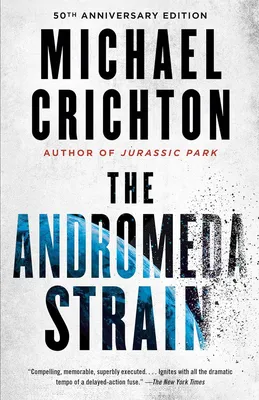
A satellite crashes in a small Arizona town. Everyone dies except a baby and an old man. A team of scientists is assembled underground to figure out what killed them before it spreads. Crichton wrote this with the clinical precision of someone who went to medical school, and it reads like the most terrifying lab report ever filed. The tension comes not from monsters but from procedures — the slow, meticulous process of trying to understand something that doesn't play by the rules of biology as we know it.
Who it's for: Readers who find procedural precision more unsettling than jump scares.
3. Project Hail Mary by Andy Weir
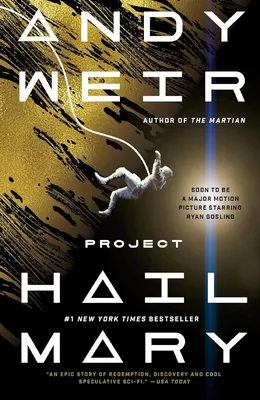
Calling this horror is a stretch, and I know it. But when you wake up alone on a spaceship with no memory of how you got there, the sun is dying, and you're humanity's last shot at survival — that's a horror premise wearing a spacesuit. Weir's gift is making real science feel urgent and accessible, and the problem-solving here is genuinely thrilling. There's also a late-story element that edges closer to horror than anything in The Martian. I won't spoil it.
Who it's for: Readers who want their existential dread served with optimism and astrophysics.
4. Into the Drowning Deep by Mira Grant
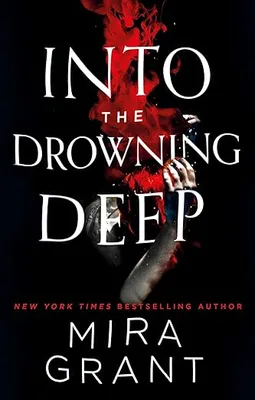
A research vessel goes looking for mermaids. They find them. The mermaids are not friendly. Grant builds the first half as a legitimate scientific expedition — marine biology, acoustics, deep-sea ecology — and then lets the second half become a creature feature that earns its kills because you actually understand the science behind the monsters. The mermaids are biologically plausible, which makes them infinitely more terrifying than any fantasy version.
Who it's for: Anyone who wants their creature features to come with peer-reviewed research.
5. Dark Matter by Blake Crouch
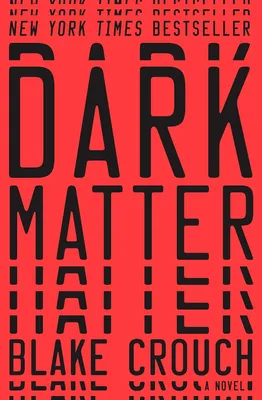
A physics professor gets kidnapped by a version of himself from another universe. That version wants his life — his wife, his son, his choices. The multiverse concept here isn't hand-waved with magic; it's built on quantum mechanics and the many-worlds interpretation, and Crouch makes it feel viscerally wrong. The horror isn't in the science. It's in the implication that there are infinite versions of you, and some of them are willing to kill for what you have.
Who it's for: Readers who want a thriller that makes them question the fundamental nature of identity.
6. Relic by Douglas Preston and Lincoln Child
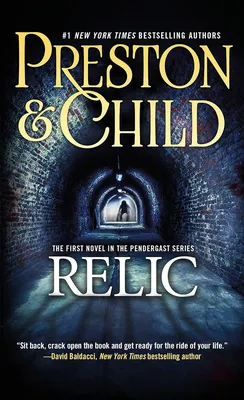
Something is killing people in the basement of the American Museum of Natural History. A detective and a scientist have to figure out what it is before the museum's big gala. The creature at the heart of this book is one of the best in horror fiction — biologically complex, scientifically explained, and absolutely terrifying. Preston and Child take their time building the museum as a character in itself, and when things go wrong, the architecture becomes a trap.
Who it's for: Readers who want their monster novels grounded in real evolutionary biology.
7. Blindsight by Peter Watts
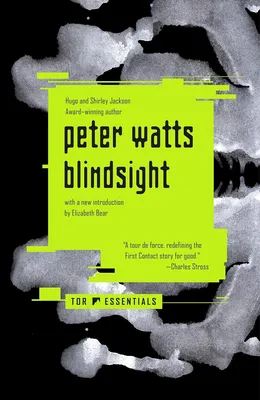
First contact, but the aliens are incomprehensible. Not in a "they speak a different language" way — in a "they challenge our fundamental understanding of consciousness" way. Watts is a marine biologist, and he writes hard science fiction with the rigor and bleakness of someone who has stared into the deep ocean and seen nothing staring back. This book will make you question whether consciousness is an evolutionary advantage or a cosmic mistake.
Who it's for: Readers who want sci-fi horror that's genuinely intellectually challenging.
8. The Hot Zone by Richard Preston
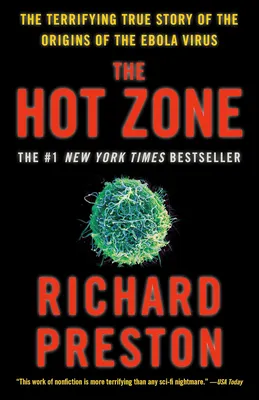
This is nonfiction, and it's more terrifying than most horror novels. Preston traces the history of Ebola from its origins in African caves to a near-outbreak in a Washington, D.C. suburb. The clinical descriptions of what the virus does to the human body are stomach-churning, and the fact that it's all real makes it exponentially worse. This book was responsible for an entire generation's fear of hemorrhagic fevers.
Who it's for: Anyone who wants to be terrified by something that actually exists.
9. Annihilation by Jeff VanderMeer
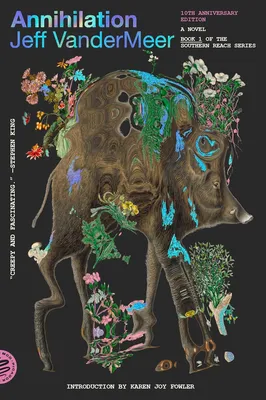
Four women enter Area X. The biologist narrates. Nothing in the environment behaves the way it should. The plants aren't quite plants. The animals aren't quite animals. VanderMeer weaponizes biological terminology to create a sense of wrongness that gets under your skin and stays there. The horror here is environmental — the landscape itself is the antagonist, and it's changing everything it touches, including the expedition.
Who it's for: Readers who want horror that feels like nature turned inside out.
10. Blood Music by Greg Bear
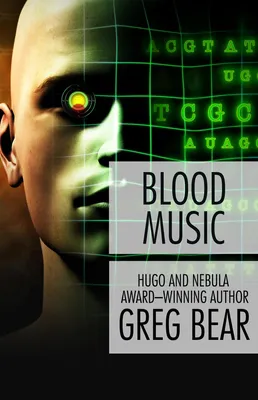
A scientist creates intelligent microorganisms. They get loose. They start evolving. They start thinking. Bear wrote this in 1985 and it's more relevant now than ever — the concept of engineered biology escaping the lab and rewriting the rules of life feels less like science fiction every year. The escalation is relentless, moving from personal body horror to something cosmic in scope.
Who it's for: Readers who think CRISPR is exciting right up until they think about it for five more minutes.
11. Sphere by Michael Crichton
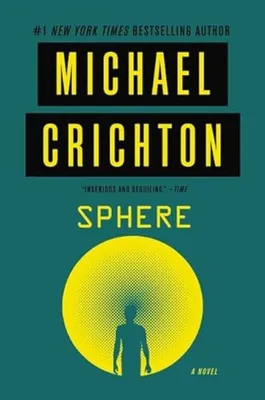
A team of scientists descends to the ocean floor to investigate what appears to be a spacecraft that's been there for 300 years. They find a perfect sphere inside. People start dying. Crichton does what he does best here — takes smart people, puts them in an isolated environment with something they don't understand, and watches the paranoia eat them alive. The underwater setting amplifies every claustrophobic impulse you've ever had.
Who it's for: Anyone who liked The Abyss and wished it were more psychologically terrifying.
12. Recursion by Blake Crouch
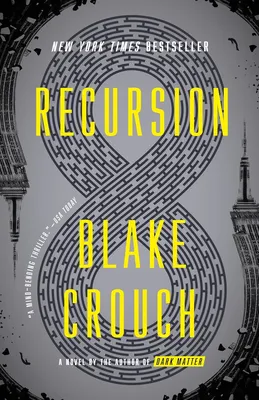
Memory is a disease. Or maybe it's a weapon. Crouch's follow-up to Dark Matter takes neuroscience and turns it into a time-loop thriller where changing your memories changes reality. The science is speculative but grounded enough to feel plausible, and the implications are genuinely disturbing. If you could relive any moment of your life, what would you change? And what would it cost?
Who it's for: Readers who want Black Mirror as a novel but with actual emotional depth.
13. The Cobra Event by Richard Preston
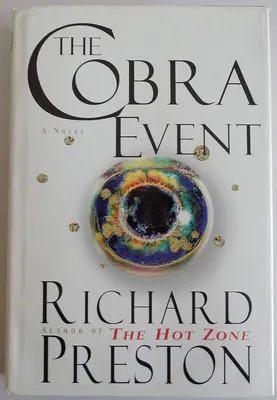
From the author of The Hot Zone, a bioterror thriller about a genetically engineered virus released in New York City. The virus is a hybrid — part smallpox, part insect virus — and what it does to the human nervous system is described with the same clinical horror that made The Hot Zone unforgettable. Preston reportedly briefed President Clinton on bioterrorism after this book was published. That's how realistic it is.
Who it's for: Thriller readers who want their fictional bioweapons to feel disturbingly plausible.
14. Parasite Eve by Hideaki Sena
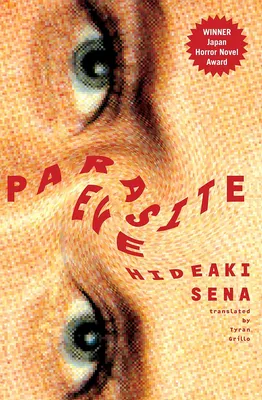
A Japanese biologist discovers that mitochondria — the organelles inside every human cell — have their own agenda. Written by an actual pharmacologist, this novel takes cellular biology and turns it into body horror. The science is dense but fascinating, and the premise is uniquely unsettling: the things keeping you alive might be using you as a host. If you've played the video game, the novel goes much deeper into the science.
Who it's for: Biology nerds who want their knowledge turned against them.
15. Ancestor by Scott Sigler
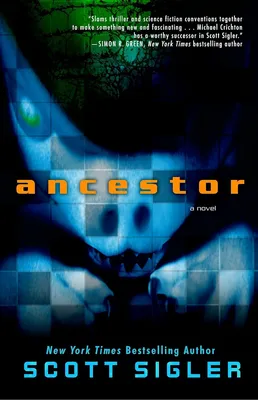
Genetic engineers try to create the perfect organ donor animal by reverse-engineering ancestral DNA. They succeed, sort of. What they create is very much alive, very much hungry, and very much not interested in donating its organs. Sigler started as a podcast novelist and brings that propulsive, addictive pacing to a creature feature that's smarter than it has any right to be.
Who it's for: Anyone who wants Jurassic Park but with genetic engineering instead of dinosaurs.
Where the Experiment Begins
If you've never read sci-fi horror before, start with Jurassic Park or Dark Matter — they're fast, accessible, and impossible to put down. If you want something that'll genuinely haunt you, go straight to Blindsight or Annihilation. And if you want to be scared by something real, The Hot Zone will ruin your week.
The best sci-fi horror understands something fundamental: we don't need aliens or ghosts to be terrified. We just need a lab, a hypothesis, and the arrogance to think we can control what comes next.
Continue Reading
17 Horror Books You've Probably Never Heard Of
Forget Stephen King. Forget Nick Cutter. These are the horror books that even horror readers haven't found yet.
14 Books With Plot Twists That Completely Blindside You
Not just "I didn't see it coming" — these are the twists that made readers physically put the book down, stare at the wall, and then immediately flip back to reread everything with new eyes.