Book recommendations, reviews, and reading lists.

12 Books Like James by Percival Everett
2026-03-20 · Written by Josh
The Book That Made Jim a Person
Percival Everett took a character most of us met in middle school English class and turned him into one of the most fully realized people in modern fiction. James dismantles the entire framework that made Jim a sidekick in his own story. The code-switching alone is worth the price of admission, the way James performs ignorance as survival while his interior life burns with intelligence, philosophy, and quiet fury.
It won the Pulitzer. Readers who've followed Everett for decades said it was about time. And now you've finished it and you want more.
Good news: this particular vein of literature runs deep. Books that reimagine familiar stories from the margins. Books where the voice is so alive it rewires your brain. Books that look at American history and say, "You heard one version. Here's what actually happened." These are the ones readers recommend alongside James, and they're all worth your time.
1. Erasure by Percival Everett
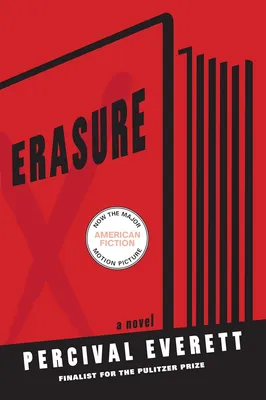
Start here. Everett's other masterpiece is a novel about a Black intellectual whose experimental fiction gets ignored while publishers clamor for "authentic" stories about poverty and struggle. So he writes the most offensively stereotypical book he can imagine and it becomes a bestseller. It's one of the funniest and most furious novels about race in America, and readers who discovered it when it came out in 2001 have been waiting two decades for the rest of the world to catch up. The movie adaptation American Fiction brought it some attention, but the book is sharper, meaner, and better.
Who it's for: Readers who loved the intelligence behind James's code-switching and want to see Everett turn that same lens on the publishing industry itself.
2. Beloved by Toni Morrison
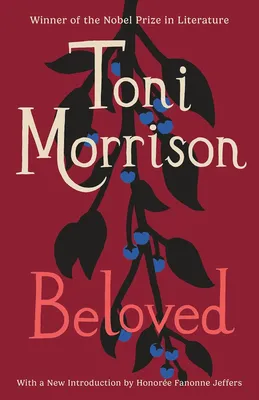
A formerly enslaved woman is haunted — literally — by the baby she killed to keep from being taken back into slavery. Morrison doesn't flinch from any of it. The prose is dense and dreamlike, the kind of writing you have to surrender to rather than parse, and the horror is not supernatural. The horror is that every single thing in this novel happened. Readers describe it as the most beautiful and devastating book they've ever read, sometimes in the same sentence. It won the Pulitzer too, and it earned every letter of it.
Who it's for: Readers who want the emotional weight of James amplified to something almost unbearable, and who trust great prose to carry them through it.
3. The Underground Railroad by Colson Whitehead
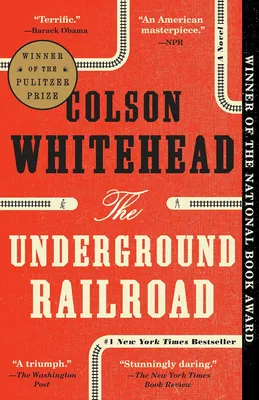
Whitehead takes the metaphor literally: the Underground Railroad is an actual railroad, with engineers and conductors and stations beneath the Southern soil. Cora, a young woman escaping a Georgia plantation, rides it north through states that each represent a different nightmare version of American racism — forced sterilization in one, a performative utopia in another. It's speculative and grounded at the same time, which is exactly what James does with its reimagined Mississippi. Another Pulitzer winner, if you're keeping count.
Who it's for: Readers who appreciated how James used a familiar framework to tell a radically different story, and want that same technique applied to the escape narrative.
4. The Known World by Edward P. Jones
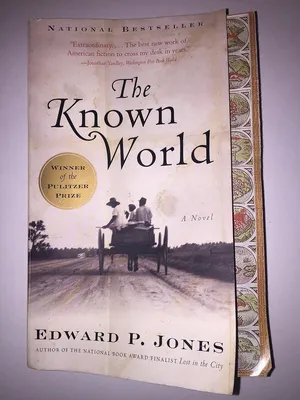
A free Black man in antebellum Virginia owns slaves. That premise alone should tell you this is not a simple book. Jones moves through time and across perspectives with the calm authority of someone who knows complicated history. The prose is precise and unhurried, the characters are contradictory and human, and the world he builds feels more real than most historical fiction manages. It won the Pulitzer in 2004 and remains one of the most underread American novels of this century.
Who it's for: Readers who loved how James complicated the morality of its source material and want a novel that does the same thing with the entire institution of slavery.
5. Demon Copperhead by Barbara Kingsolver
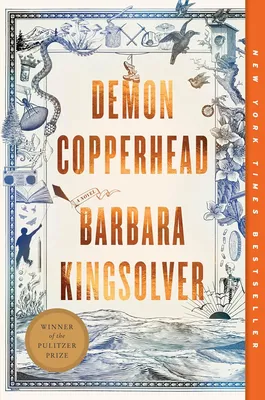
Another classic reimagined, another Pulitzer. Kingsolver transplants David Copperfield to modern Appalachia, where a kid born to a teenage mother in a single-wide trailer fights his way through foster care, addiction, and a system designed to forget him. The voice is what makes you forget you're reading fiction. Readers put James and Demon Copperhead in the same sentence constantly, and for good reason: both take a canonical white male narrative and rebuild it from the perspective of someone the original story didn't bother to see.
Who it's for: Readers who want another retelling that justifies its own existence by being better than the original in every way that matters.
6. Kindred by Octavia Butler
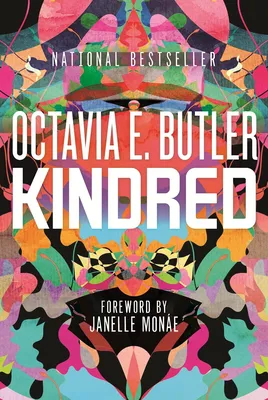
A Black woman living in 1970s Los Angeles is pulled back in time to a pre-Civil War Maryland plantation, where she discovers the white boy she keeps saving is her own ancestor. Butler uses time travel as a mechanism for forcing a modern consciousness to experience slavery firsthand. There's no comfortable distance. No historical remove. You are there, and you cannot leave until the book lets you. It's short, brutal, and one of those novels that permanently changes how you think about the past.
Who it's for: Readers who want the collision between modern and historical Black consciousness that James handles through code-switching, delivered through speculative fiction instead.
7. The Good Lord Bird by James McBride
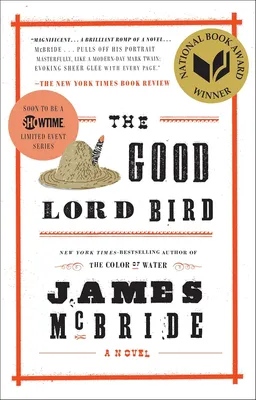
A young enslaved boy gets accidentally swept up in John Brown's abolitionist crusade while everyone around him thinks he's a girl. McBride writes with wild, reckless energy, the kind of novel that's laugh-out-loud funny on one page and gut-wrenching on the next. Like James, it takes a well-known piece of American history and tells it from the ground level, through the eyes of someone history forgot to ask. It won the National Book Award and it deserved it.
Who it's for: Readers who loved the humor and the humanity in James and want another novel that refuses to treat slavery as solely a tragedy to be solemnly observed.
8. Invisible Man by Ralph Ellison
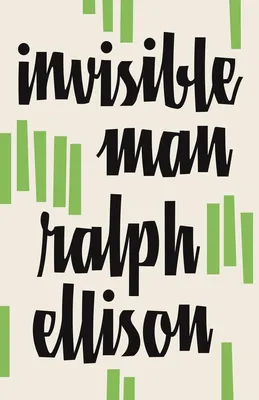
The unnamed narrator drifts through mid-twentieth-century America, from a Southern college to Harlem to an underground room illuminated by 1,369 light bulbs, and no one ever sees him as a person. Ellison published this in 1952 and it still reads like it was written last week. The novel argues that Black identity in America is constantly performed, projected onto, and denied. Which is exactly what Everett is doing in James seventy years later. If you haven't read it, now is the time.
Who it's for: Readers who recognized in James that the real subject is the performance of identity under oppression, and want the definitive American novel on that theme.
9. The Poisonwood Bible by Barbara Kingsolver
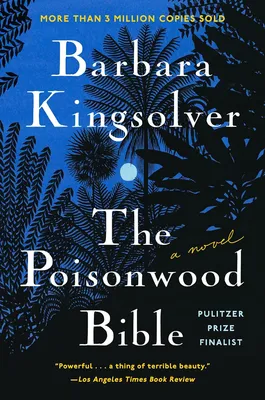
A Baptist minister drags his wife and four daughters to the Belgian Congo in 1959 to save souls. The Congo does not need saving. Each daughter narrates in a distinct voice, and Kingsolver uses those perspectives to dismantle one man's arrogance tied to an entire civilization's assumption that it has the right to rewrite other people's stories. The parallels to what Everett does in James — reclaiming a narrative from the people who thought they owned it — run deep.
Who it's for: Readers who want another multi-perspective novel about the violence of someone else telling your story for you.
10. The Trees by Percival Everett
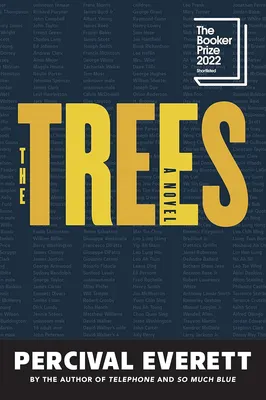
Black men who look like Emmett Till start appearing next to the bodies of murdered white men across the rural South. Two Black detectives from the MBI investigate. Everett plays it as a murder mystery, then as a satire, then as something much darker and stranger, and the tonal shifts are the point. Readers who came to Everett through James often go here next, and the experience is completely different. The Trees is funnier, angrier, and more surreal. If James is Everett in control, The Trees is Everett unleashed.
Who it's for: Readers who want more Everett specifically, and who can handle a novel that treats racial violence with both dead seriousness and pitch-black comedy.
11. The Water Dancer by Ta-Nehisi Coates
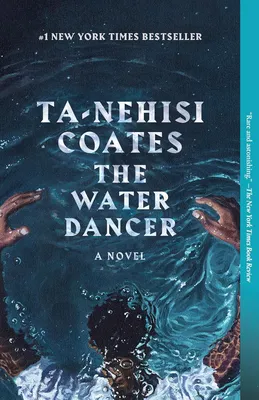
Hiram Walker is born into slavery on a Virginia plantation, and he has a power he doesn't understand. A supernatural transport triggered by memory and water. Coates uses this to build something that's part slave narrative, part fantasy, and entirely about what it costs to remember when forgetting is easier. The prose is lyrical and deliberate, closer to Morrison than to McBride, and the central idea — that memory itself is a form of resistance — echoes what Everett does with James's hidden literacy.
Who it's for: Readers who loved the speculative elements woven into James's historical setting and want a novel that pushes that blend further into magical realism.
12. Homegoing by Yaa Gyasi
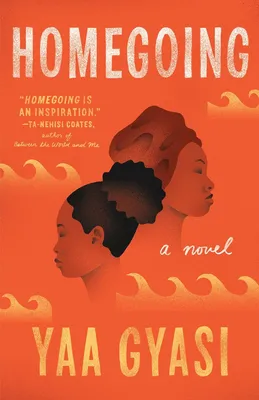
Two half-sisters are born in eighteenth-century Ghana. One marries a British slave trader. The other is sold into slavery. The novel follows their descendants across three hundred years, each chapter a different generation, tracing the parallel lines of Black experience in Africa and America. Gyasi does in twelve chapters what most family sagas take eight hundred pages to attempt. Each voice is distinct, each life is complete, and the cumulative effect is staggering. It's the kind of book that makes you understand history as something that lives in people, not textbooks.
Who it's for: Readers who want the generational scope that James hints at — what happens after the river, and after that, and after that.
Where to Start
If you want more Everett: Erasure first, then The Trees. They're different books from different parts of his brain, and together with James they give you the full range of what he can do.
If you want the retelling angle: Demon Copperhead is the closest sibling. Same premise — take a classic, rebuild it from the margins — executed with the same confidence.
If you want the weight: Beloved. Nothing else hits like it. Nothing.
And if you haven't read Invisible Man yet, stop reading this and go get it. Everett didn't write James in a vacuum. Ellison built the room he's working in.
Continue Reading
14 Books With Plot Twists That Completely Blindside You
Not just "I didn't see it coming" — these are the twists that made readers physically put the book down, stare at the wall, and then immediately flip back to reread everything with new eyes.
15 Dystopian Books That Aren't About Teenagers Saving the World
Love dystopian fiction but tired of every story being about a Chosen Teen? These 15 books feature adults dealing with collapse, surveillance, and survival without a single love triangle.