Book recommendations, reviews, and reading lists.

Why Readers Are Breaking Up With Favorite Authors
2026-03-18 · Written by Josh
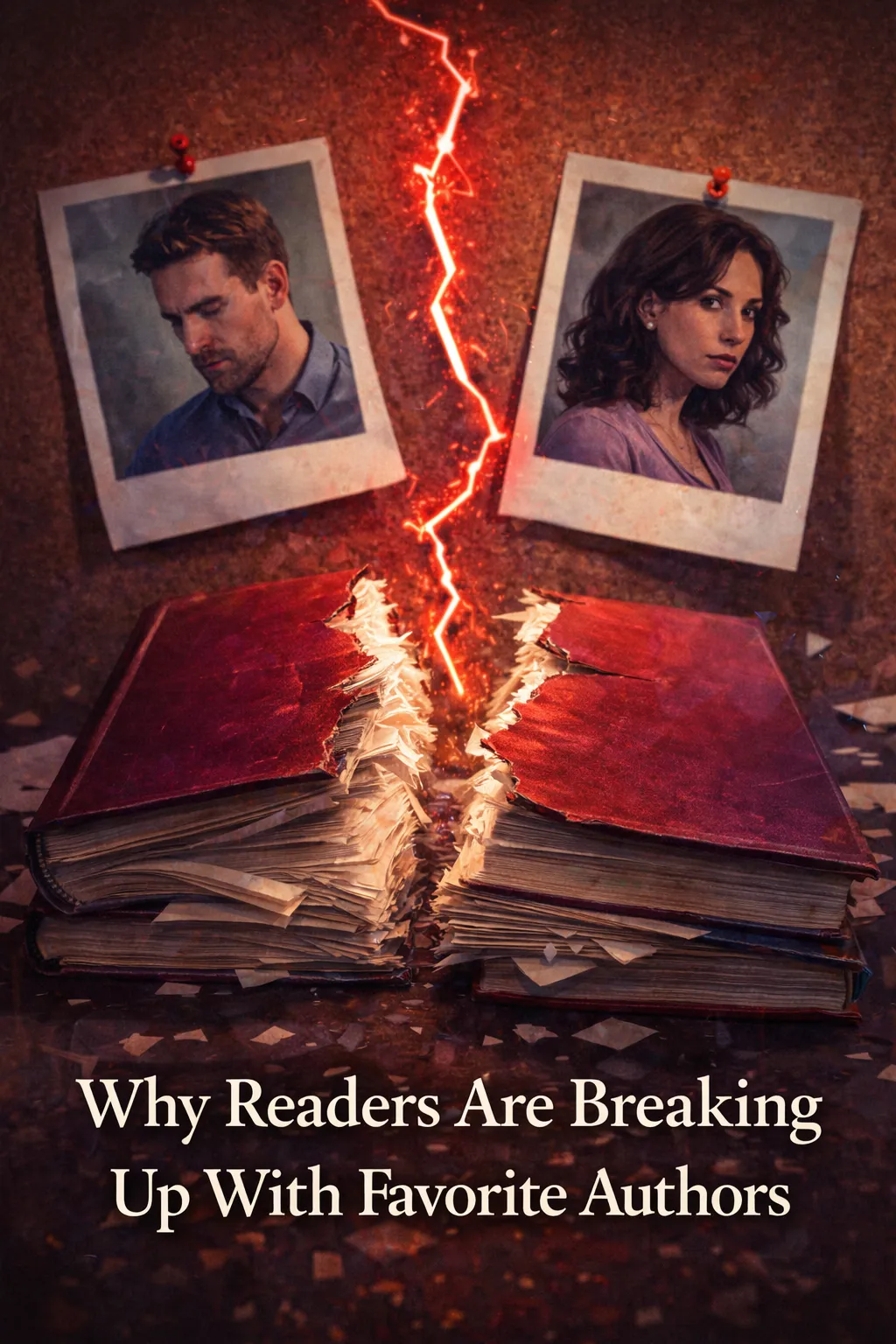
It's Not You, It's — Actually, Yeah, It Might Be You
There's a moment every reader hits eventually. You pick up the new book from an author you used to love, and somewhere around page forty you realize you're not enjoying yourself. Not in a "this is a slow burn" way. In a "why am I still doing this" way. You put the book down. You don't pick it back up. And just like that, a reading relationship that lasted years is over.
I've been thinking about this a lot lately, partly because it happened to me recently and partly because every time this topic comes up in reader communities, the floodgates open. Everyone has an author they used to devour and now can't touch. Everyone has a genre they burned through in their twenties and haven't reached for since. The reasons vary wildly, but the feeling is almost always the same — a mix of guilt and relief, like finally admitting a friendship has run its course.
So let's talk about it. Why do readers break up with authors and genres? And is it always a bad thing?
The Formula Problem
This is the most common reason I see, and it's the one that feels the most personal because it usually means you've read too many of someone's books in a row. You start noticing the scaffolding. The plot structure that felt fresh the first time reveals itself as a template by the fourth.
I hit this wall hard with a thriller author I won't name. The first book genuinely surprised me. The second one was solid. By the fifth, I could predict the twist by chapter three, and not because I'm some literary detective — because the twist was always the same twist wearing different clothes. The unreliable narrator. The timeline that doesn't add up. The final reveal that recontextualizes the opening chapter. It's a perfectly good trick. Once. Maybe twice. By the fifth time, you're not reading a novel anymore. You're watching someone perform the same magic trick at a party they've been doing all night, and you're the only one who's been paying attention long enough to see the card up their sleeve.
This happens with genres even more than individual authors. Thrillers, romance, cozy mysteries — any genre with strong conventions can start to feel like a conveyor belt if you read enough of them back to back. The tropes that initially drew you in become the exact things that push you out. You don't hate the genre. You're just full. You ate the whole bag and now you need to not look at that flavor for a while.
When the Author Changes (Or You Do)
Here's the version of this that's harder to talk about, because it requires admitting something uncomfortable: sometimes you outgrow a writer.
I don't mean that in a snobby way. I mean that the things you need from fiction at twenty-two are not the things you need from fiction at thirty-five. The experimental prose that felt electric in college can feel exhausting when you're reading in fifteen-minute windows between responsibilities. The dark, transgressive novels that felt important when you were figuring out your worldview can feel like they're trying too hard once you've actually lived through some darkness.
This goes both directions. Sometimes the author is the one who changed. They got successful and the editorial oversight got lighter, which is a polite way of saying the books got longer without getting better. Or they found a formula that sells and stopped taking risks. Or they pivoted to a different genre and left you standing at the bus stop waiting for a ride that's never coming.
I think readers feel guilty about this one because it can feel like a judgment on either the author or yourself. But it's not. People change. What you want from a book changes. A mismatch isn't a moral failing on anyone's part.
The Author Ruins It
And then there's the one nobody wants to deal with.
You love a writer's work. You've recommended their books to friends, bought copies as gifts, maybe built part of your reading identity around being a fan. And then you learn something about the person behind the work that makes every page feel different. Not different-interesting. Different-contaminated.
I'm not going to litigate specific cases here because the internet has plenty of that already, and honestly, every reader has to draw their own line. What I will say is that the "separate the art from the artist" debate is a lot easier to have in the abstract than it is when you're holding a book by someone whose behavior has genuinely hurt people. The words on the page haven't changed, but you have, because now you know something you can't unknow.
I've watched readers handle this in every possible way. Some people donate the books and never look back. Some keep reading but stop buying new copies. Some try to maintain the separation and find they just can't — the voice that felt warm and wise now sounds like something else entirely. There's no right answer, and anyone who tells you there is has probably never had to make the choice with an author they actually loved.
What I find most interesting about this particular brand of breakup is how physical it is. People don't just stop reading the books. They remove them from shelves. They put them in boxes. They take them to thrift stores. It's not enough to stop engaging with the work — they need the objects gone. That tells you something about how deeply we let authors into our lives through their writing. A book isn't just a product. It's a relationship, and when the relationship sours, keeping the evidence around feels wrong.
The Slow Fade vs. The Clean Break
Not all reading breakups are dramatic. Most of them aren't. Most of them happen the same way most real-world friendships end — not with a confrontation, but with a slow fade. You just stop reaching for that author. Their new release comes out and you note it but don't buy it. A year passes, then two, and at some point you realize you haven't thought about them in months.
This is different from the clean break, where something specific happens and you're done. The clean break comes with a story. The slow fade comes with a vague sense of "I don't know, I just moved on." Both are valid. Both are permanent more often than not.
I think the slow fade is actually more interesting, because it reveals something about how we consume fiction. We tend to go through phases. You might spend two years deep in literary fiction, then pivot hard into sci-fi, then end up in a true crime phase you didn't see coming. Each phase brings its own authors, and when the phase ends, those authors often go with it. It's not personal. It's seasonal.
The Ones You Come Back To
Here's the thing nobody talks about when they're cataloging their reading breakups: sometimes you come back. Not always. Not even usually. But sometimes.
I picked up an author last year that I'd sworn off a decade ago. I was a different reader then — impatient, less willing to sit with ambiguity, more interested in plot than voice. The same qualities that had frustrated me at twenty-four were exactly what I wanted at thirty-four. The books hadn't changed. I had. And the reunion was genuinely one of my best reading experiences that year, because I brought ten years of additional life to the text and found things in it I never could have seen before.
This doesn't mean every abandoned author deserves a second chance. Some breakups are permanent for good reason. But it's worth remembering that your reading taste isn't a fixed thing. It's alive. It shifts. The author you can't stand today might be exactly what you need in five years, and the one you worship right now might be collecting dust by then.
Why This Matters
I think readers feel weird about abandoning authors because we've internalized this idea that loyalty to a writer is a virtue. If you loved their early work, you should stick around for the later stuff. If a book changed your life, you owe that author your continued attention. But that's not how any other relationship works, and it's not how reading should work either.
Your reading life is finite. You have a limited number of books you'll get to in this life, and every one you read out of obligation is one you didn't read out of genuine desire. Breaking up with an author isn't a failure of loyalty. It's an act of self-respect. You're saying: my time matters, my taste has evolved, and I'm not going to keep showing up for something that isn't giving me what I need anymore.
That's not a betrayal. That's growth.
So if you've been carrying guilt about the author you used to love and quietly stopped reading — let it go. Your shelf is yours. Your time is yours. The books that matter to you right now are the only ones that need to be there. Everything else can go in the box in the closet, or to the thrift store, or back on the library shelf for someone who still needs them.
You don't owe any author your forever. You only owe yourself an honest reading life.
Continue Reading
Why Reading Multiple Books at Once Is Actually Better
One book at a time sounds noble. But juggling two or three? That's how you actually read more — and enjoy it.
Reading Dark Romance Doesn't Make You a Bad Feminist
The argument that dark romance is anti-feminist says more about who we trust to handle fiction than it does about the books themselves.