Book recommendations, reviews, and reading lists.

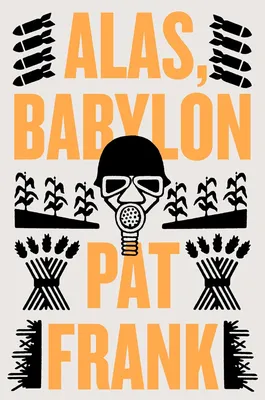
Alas, Babylon
by Pat Frank
| Published | 1976 |
| Pages | 324 |
| Categories | Fiction |
| Google Rating | 4.5/5 (10 ratings) |
What Readers Say
People who read Alas, Babylon in high school never seem to forget it — and that's one of the most consistent things I see in mentions. There's something about this book that lodges in the memory in a way most post-apocalyptic fiction doesn't. Readers coming back to it decades later report that it holds up as a story, even as they clock the casual racism and misogyny baked into its 1959 Florida setting. Nobody pretends those elements aren't there; the honest reaction is more like "yes, and, the survival story still works."
What makes the book unusual in its genre is the tone. One reader described it as "the most idyllic, least grim nuclear fiction" and couldn't decide if that was a compliment or a criticism. That ambivalence is telling. Most nuclear war fiction is interested in horror and despair — Alas, Babylon is interested in what people build when everything else is gone. Readers find that either charming or too comfortable, sometimes both at once.
Who It's For
This is the book for readers who want post-apocalyptic fiction that's actually about community and problem-solving rather than brutality and body counts. If you've bounced off grimmer survival stories because the relentless darkness started to feel exhausting, Alas, Babylon offers something genuinely different — it's optimistic in a way that feels almost subversive for the genre. Readers compare it to Earth Abides and On the Beach as foundational nuclear-era fiction, and one mentioned Warday by James Kunetka as a natural follow-up if you want something with a similar scope but a harder edge.
It's also a good entry point for readers curious about mid-century American anxiety who don't want a dry document — this is genre fiction first, social history second.
Reading Context
Alas, Babylon was published in 1959 and is now in the public domain, so it's freely available through Project Gutenberg if you want to read it without spending anything. It sits alongside Earth Abides (1949), I Am Legend (1954), and On the Beach (1957) as part of a cluster of 1950s fiction grappling with what nuclear war actually meant for ordinary people — not soldiers, not politicians, but the people left behind in small towns trying to figure out how to boil water and grow food. Reading it alongside one of those books gives the whole era more texture. The 1959 setting and the racial dynamics of the American South are inseparable from the story, and the book doesn't try to sidestep that — it just also doesn't dwell on it the way a contemporary novel would.