Book recommendations, reviews, and reading lists.

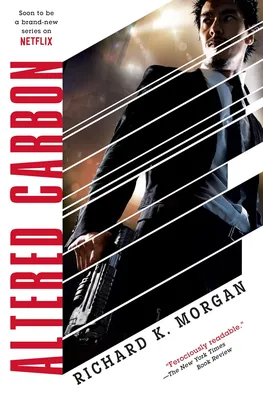
Altered Carbon
by Richard K. Morgan
| Publisher | National Geographic Books |
| Published | 2003-03-04 |
| Pages | 392 |
| Categories | Fiction |
| Google Rating | 4/5 (1 ratings) |
What Readers Say
The praise for Altered Carbon clusters around two things: the worldbuilding and the violence. Readers consistently call out how Morgan imagines the social consequences of transferable consciousness — not just the cool tech premise, but what it actually does to a society when death is temporary for the rich and permanent for everyone else. One commenter put it precisely: "He expertly imagines the effects that the technology to digitally record a person's consciousness has on society." That's the part that sticks. The worldbuilding isn't set dressing — it's the argument of the book.
The action writing also gets specific praise. Morgan writes violence the way someone who understands it would — fast, brutal, with weight behind it. It doesn't feel choreographed. Readers who came for the cyberpunk aesthetic stayed for Kovacs as a character: someone dropped into a body that isn't his, in a city that isn't his, solving a murder the victim insists didn't happen.
What surprises people is how well the noir structure holds the whole thing together. Cyberpunk worldbuilding can sprawl and lose its human stakes. The detective format keeps Altered Carbon grounded — there's always a specific mystery pulling you forward through the bigger ideas.
The one note of muted enthusiasm I've seen: some readers liked it fine without feeling urgency about the sequels. It's not a book that leaves you desperate for more — it's complete enough that continuing is optional.
Who It's For
This is the book for readers who want cyberpunk that does something with its premise. If you've read Neuromancer and felt the vibe but wished the story had more friction, more consequence — Altered Carbon is the next step. It comes up in the same breath as Neuromancer, Snow Crash, and The Expanse whenever anyone asks for cyberpunk that earns its reputation.
Readers interested in posthumanism and identity — the way the book treats bodies as interchangeable hardware while consciousness is the "real" person — also find a lot to chew on here. It shares that philosophical territory with Ancillary Justice, and Reddit threads consistently pair the two.
For readers who love gritty detective fiction first and sci-fi second, Titanium Noir by Nick Harkaway gets recommended alongside it — similar premise energy, different execution.
If you want to continue with Morgan specifically, readers point to Thirteen and Thin Air as worth your time. The consistent advice: don't bother with Market Forces.
Reading Context
Altered Carbon is the first book in a trilogy, but it functions as a complete standalone. You don't need to commit to the series to get the full story — the sequels follow Kovacs but in different settings, different bodies, different tones.
The Netflix adaptation exists and is visually impressive, but I'd read the book first. The show leans into the aesthetic; the book is more interested in the ideas underneath it.
Content to be aware of: this is genuinely violent and has explicit sexual content. Morgan doesn't soften either. If you picked this up expecting something adjacent to The Expanse's relatively measured tone, prepare for something considerably harder-edged.
No translation issues — Morgan writes in English, and the prose is clean and propulsive.