Book recommendations, reviews, and reading lists.

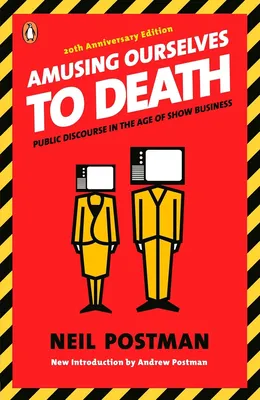
Amusing Ourselves to Death
by Neil Postman
| Publisher | Penguin |
| Published | 2005-12-27 |
| Pages | 210 |
| ISBN | 9781101042625 |
| Categories | Social Science |
| Google Rating | 3/5 (3 ratings) |
What Readers Say
Neil Postman's argument is deceptively simple: television didn't just change what we talk about — it changed how we think. He frames the real cultural threat not as Orwell's boot on the face but as Huxley's soft distraction, the kind where nobody forces you to stop thinking because you're already too busy being entertained. Written in 1985, the book aged so well it's almost uncomfortable. Reading it now, with social media doing to attention spans what television did to public discourse, feels less like reading history and more like reading a diagnosis.
Readers consistently describe this as one of those books that rewires how you see everything afterward. One commenter called it "the backbone of my Communication Theory class" and said it completely changed how they view modern media. Another put it plainly: "One of the all time greats that becomes more relevant as time passes." The core thesis — that shifting from a literate culture to a visual one degraded our ability to process complex ideas — keeps resonating because the problem Postman identified hasn't gone away. It's accelerated.
Who It's For
If you've ever felt like public conversation has gotten shallower without being able to articulate exactly why, this is your book. At 210 pages, it's short enough to finish in a weekend, and Postman writes with the kind of clarity that makes you wonder why more academics don't bother being readable. I'd especially recommend it to anyone interested in propaganda, media criticism, or anti-intellectualism — it shows up constantly in those conversations for good reason.
Reading Context
Postman's key framing is that Huxley was right where Orwell was wrong, and that contrast is half the reason this book sticks with people. If you're building out a reading list in this space, I'd pair it with This Is Not Propaganda by Peter Pomerantsev for the modern update, or with Understanding Media by Marshall McLuhan for the theoretical foundation Postman was building on. It also sits comfortably alongside The Origins of Totalitarianism by Hannah Arendt if you want to understand how societies lose their grip on truth from multiple angles. For anyone new to media criticism, this is one of the best entry points — accessible, opinionated, and unsettlingly relevant.