Book recommendations, reviews, and reading lists.

Blood Music
by Greg Bear
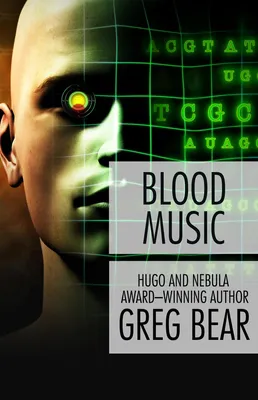
| Publisher | Open Road Media |
| Published | 2014-04-01 |
| Pages | 347 |
| ISBN | 9781497607446 |
| Categories | Fiction |
What Readers Say
The most consistent thing I hear about Blood Music is that it grabs you and doesn't let go. One commenter on r/horrorlit put it simply: "I LOVED Blood Music. Could not put it down." That tracks — the premise is a slow-burn escalation that starts with one reckless scientist injecting himself with engineered microorganisms and ends somewhere that's hard to describe without spoiling it.
When Greg Bear died, the tributes on r/printSF were full of Blood Music specifically. One reader wrote that it "blew my mind when I first started reading SF as a kid," lumping it in with Eon and The Forge of God as the books that made Bear a legend. Another simply said, "I loved Blood Music," with nothing else to add — which tells you something. It's not a book people hedge on.
The comparison that keeps coming up is Childhood's End by Arthur C. Clarke. A reader on r/ScienceFictionBooks recommended it to someone looking for something with similar "scope expansion" — that sense of the story growing from a single human-scale problem into something that reshapes the entire world. The same commenter admitted it wasn't their personal favorite, but called it "very interesting," which I think is fair. Blood Music is more unsettling than it is comforting, and it doesn't end the way you might expect.
It also surfaces regularly in threads about protagonists who transform into something non-human — which is accurate, and also an understatement. The transformation here isn't just physical. It's a question of what identity and consciousness even mean when the boundary between individual and collective starts to dissolve.
Who It's For
If you loved Childhood's End and want something with that same sense of civilizational upheaval but grounded in biological horror rather than alien contact, Blood Music is the right call. It also works well for readers who came up on New Wave science fiction — it appeared in a rec thread dedicated to that era, and the DNA is clear.
It's a strong pick if you're drawn to science-as-monster stories: the horror here isn't a creature or a villain, it's an idea that got loose. Vergil Ulam doesn't destroy the world out of malice. He just doesn't stop himself in time. That flavor of hubris-driven dread is exactly what the techno-horror crowd responds to, which is why it showed up in a ranked list of sixty scientific thriller and horror novels.
It's not for readers who need clean resolutions or a human-scaled protagonist to follow throughout. The scope eventually moves past any single point of view, and that can be disorienting if you're not ready for it.
Reading Context
I'd read this one in the evenings, when you have enough quiet to sit with what it's actually saying. Blood Music is not an action book — it's a dread book. The horror accumulates gradually, and the ideas are dense enough that rushing through it will flatten the experience.
It pairs well with The Andromeda Strain if you want something in the same biological-contamination neighborhood, or Annihilation if you're drawn to the sense that transformation is happening at a level you can't fully perceive or stop. For something with similar cosmic scale and a more optimistic frame, Childhood's End is the natural companion — Bear is clearly in conversation with Clarke here.
Bear's short story collection Tangents is worth picking up alongside this if you find yourself wanting more — at least one reader on r/printSF mentioned it in the same breath as his best novels.