Book recommendations, reviews, and reading lists.

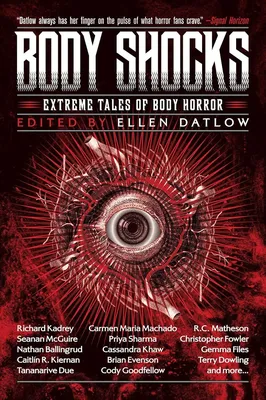
Body Shocks
by Ellen Datlow
| Published | 2021-10-19 |
| Pages | 384 |
| ISBN | 9781616963606 |
| Categories | Fiction |
What Readers Say
I’ve noticed that direct reader chatter about Body Shocks on places like Reddit is surprisingly sparse — people seem to know Ellen Datlow’s name and respect it, but specific reactions to this anthology don’t pop up as often as they do for some of her other collections. What I do see is a quiet reverence. The one substantive mention from a “17 Horror Books You’ve Probably Never Heard Of” list flat-out calls it a masterclass in what the body horror subgenre can achieve “when taken seriously,” and that phrase feels like the key. Readers who champion this collection don’t treat it as a gross-out gag reel — they see it as a rigorous, unsettling exploration of physical violation, transformation, and identity.
The anthology isn’t usually compared to a single famous story, but rather to the standard Datlow herself sets. The praise I’ve gleaned isn’t about one shocking twist; it’s about the cumulative effect of her curation. People don’t name a standout scene so much as they point to the book as a whole, describing it as the “best body horror short fiction” in one volume. This suggests the consistent reaction among its advocates is one of impressed discomfort — a feeling that they’ve been walked through the genre’s possibilities by someone who understands it deeply, rather than just being thrown into a pile of unpleasantness. The lack of “this story was gross” comments and the presence of words like “masterclass” tell me readers finish it feeling intellectually challenged, not just nauseated.
Who It’s For
This is for readers who already know they want body horror to do more than gross them out. I’d hand it to someone who has read Octavia Butler’s “Bloodchild” — which appears alongside Body Shocks on the same curated list — and wanted that same blend of visceral dread and thematic weight. It’s not for casual horror fans dipping a toe in; Datlow’s name attracts a crowd that expects literary sophistication alongside the viscera. If you’ve ever found yourself defending body horror as a vehicle for serious ideas about autonomy, illness, and the self, this anthology is your ammunition.
Equally, this is for the reader who trusts an expert guide. The mention calls Datlow “arguably the greatest living horror anthology editor,” and that endorsement carries a specific promise: you’re not getting filler. You’re getting a survey of the subgenre calibrated by a tastemaker. If you’ve loved the thematic tightness of collections like The Weird or Datlow’s own The Best Horror of the Year series, this feels like a deliberately unsung essential — a book you recommend in threads asking for truly unique horror that the algorithm hasn’t already surfaced to everyone.
Reading Context
I’ve seen Body Shocks placed on a list alongside wildly different works like The Library at Mount Char and The Salt Grows Heavy, which tells me its readers are often the kind to binge deeply strange, philosophical horror. It belongs near the top of any body horror syllabus, sitting comfortably as a companion to foundational texts while showcasing the modern range of the form. It’s an anthology, so pacing is naturally episodic — perfect for reading between longer novels when you need something that hits hard and fast. The list that includes it specifically suggests it as the one anthology to prioritize, implicitly positioning it above other collections as the definitive primer.
Before you start, know that Datlow’s approach is unflinching but purposeful. This isn’t splatterpunk where the point is transgression for its own sake; it’s body horror treated as literary craft. No adaptation is mentioned, so you’re working solely with the text. Approach it the way you might a curated art exhibit — not every piece will land the same way, but the conversation between them is the point. If you’re pairing it with something, the list’s inclusion of Bloodchild and Other Stories makes a perfect double feature for tracing the evolution of body horror from Butler’s masterpiece to the contemporary voices Datlow has assembled.