Book recommendations, reviews, and reading lists.

Brave New World
by Aldous Huxley
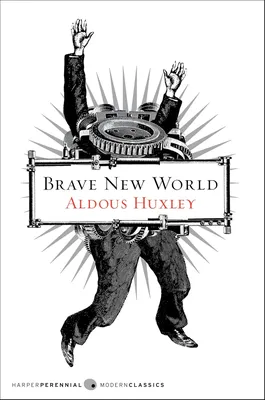
| Published | 1932 |
| Google Rating | 0.0/5 (0 ratings) |
What Readers Say
The thing Reddit has largely settled on with Brave New World is that it's more unsettling than 1984 precisely because it doesn't look like a nightmare. Control through comfort, pleasure, and engineered contentment — readers keep coming back to how accurately it predicts a world numbed by entertainment rather than terrorized into compliance. The debates about which dystopia is more relevant to now (1984 or BNW) are a genuine recurring argument in these threads, and Brave New World wins that particular argument more often than its reputation might suggest.
The honest critical conversation is interesting too. A meaningful chunk of readers — including some who love the first half — find the second half falls apart when the Savage arrives and the book becomes a dialogue-heavy philosophical argument. Huxley himself apparently had regrets about the structure, and there's a companion essay, Brave New World Revisited, where he reconsiders the book's choices decades later. Readers who find the back half tedious aren't wrong; readers who find the whole book boring but acknowledge its importance aren't wrong either. It's one of those books where you can appreciate the ambition completely and still find the reading experience uneven.
What keeps it on "must-read" lists is the ideological architecture — the caste system built through conditioning, the soma-medicated population, the way happiness gets used as a control mechanism. That framework is durable enough that readers still find it genuinely illuminating, not just historically interesting.
Who It's For
Readers who've done 1984 and want the companion piece — the dystopia-by-pleasure rather than dystopia-by-fear. If the question "what if the system made people want their own subjugation" interests you, this is the book that asks it most directly. Better suited to readers who enjoy ideas over plot; the story is a vehicle for the argument. If you bounced off 1984 because it was too grim, Brave New World might actually be an easier entry point — it's shorter, less punishing, and the horror is quieter.
Reading Context
Brave New World is almost always mentioned alongside 1984 and Fahrenheit 451 as the classic dystopian trilogy — people treat finishing all three as a kind of baseline cultural literacy project. It also shows up in sci-fi canon lists alongside Le Guin and Asimov, acknowledged as social SF that belongs in literary conversation. The 2020 Peacock TV adaptation exists but doesn't come up in reader discussions, which tells you something about how it landed. Brave New World Revisited (1958) is the nonfiction companion Huxley wrote when the world started looking uncomfortably familiar — worth reading after the novel.