Book recommendations, reviews, and reading lists.

Confessions
by Kanae Minato
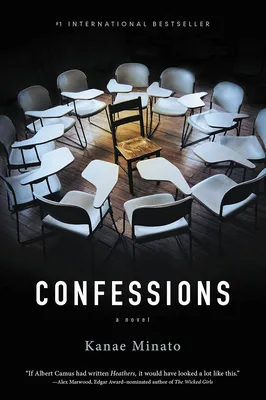
| Publisher | Mulholland Books |
| Published | 2014-08-19 |
| ISBN | 9780316200929 |
| Categories | Fiction |
What Readers Say
The Reddit reaction to Confessions is unusually consistent for a thriller: people keep describing the same moment. Someone recommends it in a plot-twist thread, someone else reads it, comes back and reports that they gasped out loud in the middle of the night and woke up their partner. That's the kind of book this is. The twist recommendation thread where it surfaces has a score of 84, which tells you something — readers who care about plot construction specifically seek it out and pass it along. It lands on personal favorites lists alongside Sharp Objects and Drive Your Plow Over the Bones of the Dead, which is good company if you know what those books demand of a reader.
What surprises people most isn't any single revelation — it's the structural move. The story cycles through multiple perspectives, and each new voice reframes everything you thought you understood from the last one. By the time you reach the end, the moral ground has shifted enough times that the person you started out judging might be the only one making any coherent sense. Readers in the psychological thriller thread note it alongside Fingersmith and Revenge by Yoko Ogawa, which suggests the audience for this book skews toward readers who want their thrillers to have some intellectual weight behind the dread. The most common pushback I've seen: people expecting a conventional thriller are sometimes unsettled by how cold and precise the narration is. That's a feature, not a flaw — but it's worth knowing going in.
Who It's For
I'd hand this to anyone who says they want a psychological thriller that actually respects their intelligence. If you liked Gone Girl but wanted it darker and less domestic, or if you've read The Secret History and wish it had been set in a Japanese middle school with a teacher as the most dangerous person in the room, this is your book. It also works well for readers who've been circling Japanese crime fiction — it sits comfortably alongside Revenge by Yoko Ogawa and the quieter dread of Out by Natsuo Kirino as an entry point to the genre's particular brand of moral ambiguity.
The other reader type this book finds is the one who's tired of thrillers that pull their punches. Confessions does not pull its punches. The violence is psychological but it lands hard, and Minato is not interested in giving you a clean catharsis at the end. If you bounced off gentler mysteries and wanted something that would actually shake you, this is a strong candidate.
Reading Context
The novel is short — under 250 pages — and reads almost like a compressed series of testimonies, each one given by a different character close to the central crime. The film adaptation (2010, directed by Tetsuya Nakashima) is genuinely excellent and worth watching after you finish the book; several Reddit readers mention it in the same breath as the novel, and the visual style adds another layer to what Minato built on the page. If you're new to Japanese crime fiction, this is not a bad place to start, but I'd note that the tone is closer to literary fiction than genre thriller — the pacing is deliberate, the prose (in Stephan Hoye's translation) is controlled and almost clinical, and the emotional devastation is cumulative rather than sudden.
One thing worth knowing before you open it: this book takes children as killers seriously, without sensationalizing it and without flinching from it. That's part of what makes it so unsettling — Minato is not writing shock fiction. She's writing a serious, cold-eyed examination of guilt, culpability, and what people do when the systems meant to protect them fail completely.