Book recommendations, reviews, and reading lists.

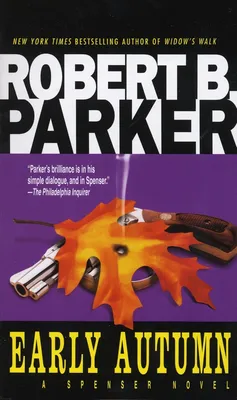
Early Autumn
by Robert B. Parker
| Published | 1987 |
| Pages | 202 |
| ISBN | 9780727814777 |
What Readers Say
Readers consistently point to Early Autumn as the moment the Spenser series reveals its true heart. Where the earlier books are sharp PI procedurals, this one slows down and gets personal — Spenser takes on a case that’s less about a crime and more about pulling a neglected teenager out of a toxic family stew. The investigation elements are solid, but what people remember is the stretch where Spenser essentially kidnaps the boy with permission, builds him a cabin, and teaches him how to be strong. It’s a full-on mentorship novel, and the bond that forms between the jaded boxer-turned-detective and the kid gives the book a warmth you don’t expect from noir. Readers note that Hawk, Spenser’s morally ambiguous best friend, provides the perfect counterweight — his presence underlines the education in manhood by showing the kid there’s more than one way to live by a code.
The praise isn’t without its reservations. Some readers mention that Parker’s style can feel dated in its gender politics, and that the book’s pace is quieter than the series’ usual quick, quippy rhythms. However, the consensus is that the deliberate slowness is a feature, not a bug, because it allows the relationship at the center to breathe. The dialogue still crackles with Parker’s trademark banter, and the Boston setting — rendered with real affection, from the bars to the back roads — grounds everything in a specific, gritty place. No one calls this the darkest book on the shelf; instead, they describe it as a character comedy wrapped inside a detective story, with moments of surprising tenderness that hit harder than the punches.
Who It's For
Pick this up if you love classic PI fiction but want something less nihilistic than Chandler or Hammett — Early Autumn is ideal for readers who enjoy the voice and the city-soaked atmosphere of those writers but sometimes wish they’d linger longer on the people instead of the plot machinery. If you’ve read and enjoyed the later Spenser novels that lean more heavily on the Hawk bromance and moral inquiry, this is the origin point that deepens the whole series. Fans of John D. MacDonald’s Travis McGee will recognize a similar blend of action, introspection, and a protagonist who can’t stop himself from fixing the broken things he stumbles across. It’s also a great hand-sell for anyone who likes mysteries where the real mystery is character — think Gone Baby Gone with less darkness and more hope, or Tana French’s Dublin Murder Squad books if they spent more time on the street with a single detective and his personal code.
Reading Context
Though Early Autumn is technically the seventh Spenser novel, most series fans and the broader Reddit community agree it’s the best entry point. It was written to stand alone, and you don’t need prior history with Spenser or Hawk to feel the weight of the decisions they make. After finishing, readers often jump back to The Godwulf Manuscript to see the hard-boiled origins, or ahead to A Catskill Eagle to watch the Spenser-Hawk dynamic get pushed to its limit. There’s a 1980s TV adaptation, Spenser: For Hire, that captures the tone of the books well, but no film that directly adapts Early Autumn — this one lives on the page. If you want to understand what 40 years of readers have loved about this series, this is the novel that shows you the machine behind the wit: not the cases, but the education of a boy who needs someone to show him what it looks like to be a man.