Book recommendations, reviews, and reading lists.

Einstein's Dreams
by Alan Lightman
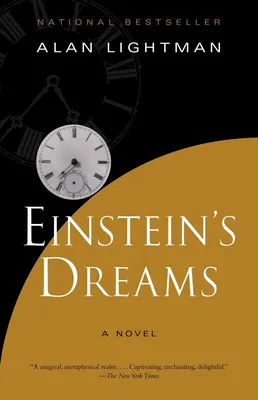
| Published | 1999 |
| Pages | 192 |
| ISBN | 9780340752005 |
What Readers Say
The mention data here is thin — no extended commentary, no debates, no complaints — but the one quote that does appear is telling: readers describe Einstein's Dreams as a book that "will do something to your brain that's hard to describe." That's not hyperbole, it's an honest shrug. People reach for it when they want something beautiful and untranslatable, and they keep recommending it in those contexts. It shows up alongside Piranesi and House of Leaves in the same breath, which tells you something about the kind of reader who loves it.
It's short — 192 pages — and it reads more like a prose poem than a novel. That's either exactly what you want or a dealbreaker depending on your tolerance for books that don't have a traditional plot. The Reddit evidence suggests readers treat it as a book to be experienced rather than consumed.
Who It's For
If you loved Piranesi and want something with that same quality of strangeness — quiet, cerebral, each chapter its own self-contained world — this is the natural next read. It also shows up in the same lists as The Hitchhiker's Guide to the Galaxy and Circe, which is a pretty wide range of readers all circling the same feeling: books that do something unusual with reality.
This is not for readers who want plot momentum or character development. It's for readers who are fine sitting with an idea for a few pages and letting it dissolve.
Reading Context
Einstein's Dreams is a standalone novel — no series, no sequels. It was Lightman's debut fiction, published in 1992 (this edition 1999), and it's the book he's best known for despite being a working physicist. Each chapter imagines a different theory of time as if it were a dream Einstein had while working on special relativity in 1905. You don't need any physics background; the science is more like a prompt than a subject.
It comes up in "books you've never heard of" lists even though it's been around for decades, which suggests it has a discovery problem rather than a quality problem. If you haven't encountered it yet, that's the gap it fills.