Book recommendations, reviews, and reading lists.

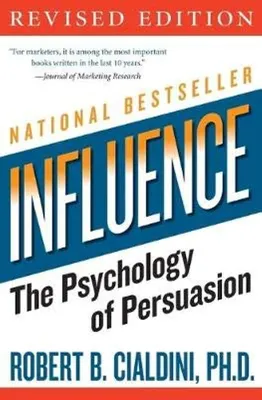
Influence
by Robert B. Cialdini, PhD
| Publisher | Harper Collins |
| Published | 2009-06-02 |
| Pages | 338 |
| ISBN | 9780061899874 |
| Categories | Self-Help |
| Google Rating | 4/5 (15 ratings) |
What Readers Say
The most telling reader response to Influence comes from someone who used to think propaganda was "lies, distortions, and low IQ people being misled" — until they were asked to help a marketing group and actually applied Cialdini's principles across multiple advertising campaigns. Their conclusion: "propaganda is simply effective persuasion," and these techniques work on smart people who've been trained to recognize them. That's the insight that makes this book land differently than other entries on the persuasion shelf. Cialdini isn't theorizing. He embedded himself in sales operations, marketing firms, and fundraising organizations, and what he brought back is a practical anatomy of how influence actually functions.
The six principles — reciprocity, commitment, social proof, authority, liking, scarcity — are simple enough to remember and specific enough to spot in the wild. Readers describe finishing the book and suddenly seeing these levers everywhere: in how products are priced, how political messages are framed, how conversations are steered. One reader put it well — the book teaches you "how non-unique we are" and how our decisions aren't as logical as we'd like to believe. It's really about self-image and wanting to belong to a tribe.
What's notable is how often readers recommend it for young adults. It's accessible, it reads quickly, and the examples are concrete enough that the principles stick. There's no academic jargon to fight through.
Who It's For
Readers who want a practical, grounded account of how persuasion works at the level of individual psychology. I'd start here if you're new to the propaganda and persuasion reading list — understanding the basic mechanics makes everything else click into place faster. It's also the right book for anyone who thinks they're too smart to be manipulated, because Cialdini's central point is that knowing how the tricks work doesn't mean the tricks stop working on you.
Reading Context
Influence often gets shelved next to Dale Carnegie's How to Win Friends and Influence People, but they're doing different things. Carnegie is about social application — how to be liked, how to persuade in conversation. Cialdini is about understanding the machinery itself, which makes it the more useful read if you're interested in propaganda, marketing, or political messaging as systems. From here, readers typically go to Postman's Amusing Ourselves to Death (how media structure shapes what persuasion is possible) or Chomsky's Manufacturing Consent (how those persuasion mechanics operate at institutional scale). Cialdini has also written a follow-up, Pre-Suasion, which covers what happens before the persuasion attempt — how context and framing set the stage.