Book recommendations, reviews, and reading lists.

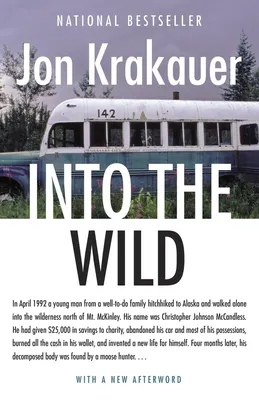
Into the Wild
by Jon Krakauer
| Publisher | Anchor |
| Published | 1996 |
| Pages | 207 |
| ISBN | 9780385486804 |
| Categories | Biography & Autobiography |
| Google Rating | 4/5 (193 ratings) |
What Readers Say
The word that comes up most reliably is haunting. Readers finish this book and carry it around for days — not because of a twist or a revelation, but because of the unresolved feeling at its center. Krakauer refuses to render a verdict on Chris McCandless, and that refusal is either the book's greatest strength or its most maddening quality, depending on who you ask. The people who love it most tend to be the ones who feel something like recognition when reading about McCandless — not agreement, exactly, but a familiar pull toward escape that they've never quite been able to explain.
The most consistent criticism is that McCandless comes across as reckless and naive, and that the book doesn't push back on him hard enough. Readers who find the premise frustrating tend to bounce off it early. But even some of those readers acknowledge that Krakauer's writing keeps the pages turning — this is one of the books that gets recommended in "non-fiction that reads like a novel" threads reliably, and the pacing holds up. At 207 pages it's short enough to read in a sitting or two, which matters: the compressed length is part of what gives it its punch.
What surprises some readers is how much of Krakauer himself is in it. He doesn't stay out of the narrative — he brings in his own history with risk and wilderness, which some people find intrusive and others find essential. The book is as much about why certain people need to push to extremes as it is about one person who did.
Who It's For
If you've ever had the thought — even fleetingly — of abandoning your current life for something simpler and more physical, this book is going to hit differently than it would for someone who hasn't. It gets recommended to people feeling stuck in their 20s, people who fantasize about going off-grid, people who feel the tension between conventional success and the urge to opt out entirely. It's not a self-help book, and it doesn't tell you what to do with that feeling — it just maps its full shape, including the cost.
Readers who love Wild by Cheryl Strayed, The Great Alone by Kristin Hannah, or Tracks by Robyn Davidson tend to gravitate toward it naturally. It also pairs well with Krakauer's own Into Thin Air — the two books cover related territory about people who push themselves into lethal situations, and the contrast between how each story ends is worth sitting with. If you've read one and not the other, the gap is worth closing.
Reading Context
Into the Wild gets shelved with adventure nonfiction, but it reads more like literary journalism with an existential undertow. It fits alongside books like Alive by Piers Paul Read or Sebastian Junger's work — stories where the wilderness isn't backdrop but pressure, forcing questions about what people are actually made of. Krakauer doesn't answer those questions cleanly, and that's the point.
Worth knowing going in: this is not a survival story with a last-minute rescue. The outcome is established in the opening pages. What Krakauer is investigating isn't what happened but why — and whether the line between idealism and self-destruction is as clear as we'd like it to be. Readers who need a resolution or a lesson will struggle. Readers who are comfortable sitting with something unresolved will find it sticks with them in ways that tidier books don't.