Book recommendations, reviews, and reading lists.

My Cousin Rachel
by Daphne du Maurier
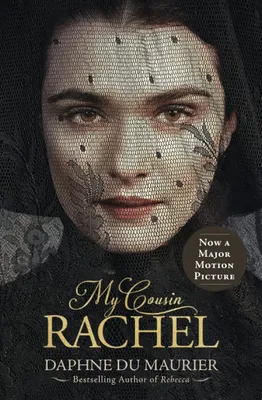
| Publisher | Sourcebooks, Inc. |
| Published | 2009-03-01 |
| Pages | 402 |
| ISBN | 9781402217098 |
| Categories | Fiction |
What Readers Say
Readers consistently describe My Cousin Rachel as an experience that gets under your skin and stays there. I see a lot of people comparing it to du Maurier’s more famous Rebecca, but with a crucial difference—while Rebecca haunts you with a dead woman’s presence, this one leaves you spiraling because you genuinely can’t decide whether the title character is a victim or a predator. One reader admitted it’s actually their favorite over Rebecca, and another said they’ve read both repeatedly without finding any other author who can “make me feel like that.” That feeling is the book’s signature move: a creeping, psychological unease that never resolves neatly.
The common praise centers on du Maurier’s ability to write a thriller without relying on gore or jump scares. People call it “spooky but not scary,” a vibe that scratches an itch adjacent to true crime. The ambiguity is the point—readers warn that you finish the book still questioning everything, and that’s exactly why it works. I haven’t spotted much in the way of consistent criticism, which tells me that even those who might want a clearer resolution tend to respect the craft. If anything, the frustration is the intended effect; du Maurier makes you complicit in the narrator’s obsessive, unreliable judgment.
Who It’s For
This is for readers who loved Rebecca and want more of that suffocating, gothic atmosphere, but it’s also a perfect entry point if Rebecca felt slightly too slow for you—this one moves with a sharper psychological edge. I’d hand it to anyone who devoured The Talented Mr. Ripley and craves a story where charm and menace are indistinguishable. It’s frequently pitched alongside Agatha Christie’s darker, less cozy works like Endless Night, and I think it fits squarely in the company of modern psychological thrillers like Gone Girl, though with a Victorian restraint that makes the manipulation feel even more insidious.
There’s also a quiet but notable appreciation for this as a feminist read. The book refuses to give you the easy satisfaction of labeling Rachel, and that forces you to examine your own assumptions about women, power, and suspicion. If you’re someone who finds true crime compelling but wants the same moral ambiguity in fiction, this scratches that itch beautifully.
Reading Context
Readers frequently pair this with Rebecca, and honestly, reading both back-to-back is the move if you want to understand du Maurier’s particular genius for psychological architecture. Within the gothic and psychological thriller space, My Cousin Rachel sits comfortably alongside The Picture of Dorian Gray as a study in influence and corruption, but with far less supernatural window dressing. A film adaptation exists, and while I see it mentioned less often in reader discussions than the Hitchcock Rebecca, it’s worth knowing about—especially since the ambiguity translates differently on screen versus on the page, where du Maurier’s prose locks you entirely inside the narrator’s head.
Before starting, know this: you’re not getting a whodunit or even a clear villain. The frustration of not knowing is the whole point. Go in with patience for a slow burn, and be prepared to sit with that discomfort long after you’ve closed the book.