Book recommendations, reviews, and reading lists.

Out
by Natsuo Kirino
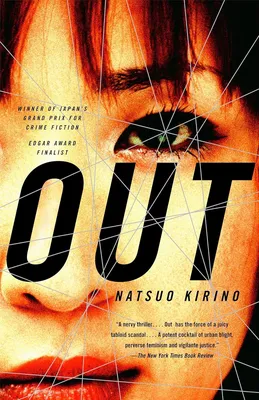
| Publisher | Vintage |
| Published | 2022-07-19 |
| Pages | 417 |
| ISBN | 9780593312032 |
| Categories | Fiction |
What Readers Say
The thing that surprises people most about Out is how matter-of-fact it is. This isn't a book where the murder is the shocking centerpiece — it's almost the starting pistol. What Kirino is really doing is tracing the quiet desperation that made it inevitable, and readers consistently say they find themselves rooting for women doing genuinely terrible things without feeling manipulated into it.
The four women at the bento factory are not softened for the reader. They're tired, compromised, and morally complicated, and that's precisely what makes them compelling. Readers who come in expecting a conventional thriller often find themselves disoriented by how much the book functions as social realism — this is a portrait of what late-stage economic exhaustion does to women who have no good options, told through the lens of a body that needs disposing.
What lingers, according to people who've read it, is Masako. She's the organizing intelligence of the group — cool, efficient, unsentimental — and she becomes one of those rare characters who feels genuinely unknowable in a way that keeps you thinking long after the book ends. Readers describe her the way you'd describe someone you actually met: with a kind of wary respect.
The darkness escalates in ways readers don't always anticipate. The book earns its reputation as pitch-black, and that's not marketing language. It goes to places that can feel genuinely transgressive, especially in its final acts. Some readers find the violence toward the end excessive; others argue that's exactly the point — that Kirino refuses to let you off the hook any more than her characters let themselves off.
Who It's For
This is a book for readers who don't need their female characters to be sympathetic in the conventional sense — who are comfortable with women acting in their own interest, even violently, even wrongly. If you loved The Secret History for its moral complicity and cold atmosphere, Out operates in a similar register, just with more economic precarity and less academia. Fans of Gone Girl who wanted something grittier and less interested in genre mechanics tend to find their way to this one eventually.
I'd pair it with Convenience Store Woman by Sayaka Murata if you want to stay in contemporary Japanese women's fiction — Murata's approach is more darkly comic and absurdist, but both books are interested in women who don't fit the social contract. The Power by Naomi Alderman is a natural companion for readers drawn to the female-rage dimension; where Alderman goes big and speculative, Kirino stays ground-level and specific. And My Year of Rest and Relaxation shares a certain emotional flatness with Masako's chapters — that sense of a woman deliberately evacuating her own interiority as a survival mechanism.
Readers who struggle with morally redemptive arcs or tidy resolutions tend to respond well to this one. It doesn't offer either. It's also a book that rewards readers interested in Japan beyond the aestheticized version — Kirino is writing about shift work, gambling debt, domestic violence, and the particular exhaustion of women who have been useful their entire lives and have nothing to show for it.
Reading Context
The English translation is by Stephen Snyder, and it holds up. Snyder does good work with Kirino — the prose doesn't feel flattened the way some crime translations can. If you're going in knowing it won a Grand Prix for Crime Fiction and was an Edgar Award finalist, be prepared for something that wears those credentials lightly. It reads more like literary fiction with a crime plot than like a procedural.
Content warnings worth knowing: there is graphic violence including dismemberment, sexual violence, and the full ugliness of an abusive marriage rendered without flinching. This isn't gratuitous in the exploitation sense, but Kirino does not look away, and neither will you. Go in with eyes open.
If you want to read more Kirino, Grotesque is her follow-up and takes the same unflinching approach to the lives of women working in sex work and corporate Tokyo. It's even darker, if that's possible, and narrows its scope in ways that make it more claustrophobic. I'd read Out first — it's the better entry point and the more fully realized novel.
No adaptation to speak of in English. There's a Japanese film from 2002 that's difficult to find with subtitles but worth tracking down if you're interested in how the book translates visually. The film leans into the genre elements more than the novel does.