Book recommendations, reviews, and reading lists.

Replay
by Ken Grimwood
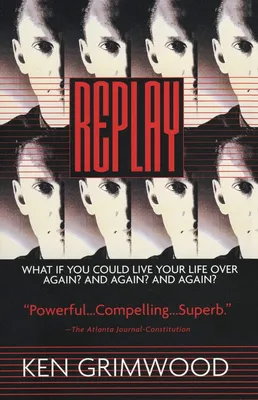
| Publisher | Harper Collins |
| Published | 2010-09-14 |
| Pages | 248 |
| ISBN | 9780062030696 |
| Categories | Fiction |
What Readers Say
The comment that sticks with me most came from someone who described being a "nostalgic person trying to relive the past and dwelling on fixing things I obviously can't" — a surgery that went wrong, a friend who died in a car crash that morning. They said Replay "blew my mind and helped me get over it." That's not a review. That's a testimony.
Replay lands differently than most time-loop stories because Grimwood isn't playing it for laughs or high-concept cleverness. Readers keep recommending it in the same breath as 11/22/63 and The Gone World — books that use time as a mechanism to ask something heavier: what do you actually do with a second chance? The answer Replay gives, slowly and painfully, is that you probably waste it. And then you try again.
One reader noted that Grimwood himself died of a heart attack in middle age — the same way his protagonist dies at the start of the book — and suggested it "might be a memoir." I don't know if that's true, but it's the kind of detail that stays with you. It reframes the whole novel as something more desperate and personal than a thought experiment.
People also keep returning to it. "I think about this one a lot" is a reply that showed up under a recommendation thread, no further explanation. That's the sign of a book that settles into your head quietly and doesn't leave.
Who It's For
I'd hand this to someone in their late thirties or forties who's started doing the math on their life — adding up the detours, the wrong turns, the things they can't take back. Replay was recommended directly to someone who described themselves as a "loser in their early 40s who feels there's no way of making a comeback," and the person recommending it said: "I'm sure you won't feel that way about yourself going forward."
It's also for readers who love ambitious speculative fiction but are tired of books that use time travel as a plot engine rather than a philosophical one. If Groundhog Day scratched something for you but you wanted it darker and more adult, this is where that instinct leads. Grimwood published it in 1986 — before the time-loop genre became a genre — and it still feels more emotionally serious than most of what followed.
Fans of 11/22/63, Cloud Atlas, and The Gone World tend to gravitate toward Replay for similar reasons: all three use speculative mechanics to explore regret, consequence, and the limits of control over your own life.
Reading Context
This is a quiet-evening book, not a commute book. It needs space to breathe, and so do you while reading it. The premise moves fast but the emotional weight accumulates slowly — by the third or fourth cycle of Jeff's life, the repetition stops feeling like plot mechanics and starts feeling like grief.
I'd read it alone. It's the kind of book that might make you want to sit with your thoughts for a while afterward, and that's easier to do when you're not explaining yourself to anyone. If you've ever lain awake replaying a decision you made years ago — a relationship you let drift, a moment you didn't speak up — Replay will find that place in you and press on it. Gently, but persistently.
It's short enough to finish in a few sittings. Don't rush it.