Book recommendations, reviews, and reading lists.

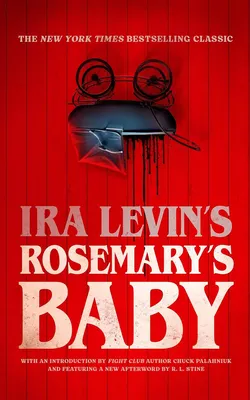
Rosemary's Baby
by Ira Levin
| Publisher | Simon and Schuster |
| Published | 2014-05-05 |
| Pages | 243 |
| ISBN | 9781605989334 |
| Categories | Fiction |
What Readers Say
Rosemary's Baby keeps showing up alongside The Haunting of Hill House, The Shining, Dracula, and Frankenstein — the books people name when they're trying to identify the essential horror canon. That kind of consistent company tells you something. This isn't a book people mention as a guilty pleasure or a genre curiosity; it gets treated as a genuine benchmark, one of the novels that defined what psychological horror can do.
The description that comes up is almost always the same: gaslighting, paranoia, and the terrifying loss of control over your own body. Levin builds claustrophobia not through monsters but through people — neighbors, a husband, ordinary domestic life turning slowly wrong. The question running through the whole book is whether Rosemary is losing her mind or whether something truly evil is happening around her, and Levin holds that tension for an impressively long time before answering it.
Who It's For
This is for readers who want horror that works through dread and social pressure rather than shock. If The Haunting of Hill House clicked for you because the horror was psychological and the threat came from within as much as without, Rosemary's Baby operates in the same register — slow-burn, suffocating, built on the feeling that no one around you can be trusted. It also belongs on the list for anyone interested in body horror that doesn't rely on gore; the violation here is quieter and, for many readers, more disturbing because of it.
Reading Context
The 1968 Roman Polanski film is one of the most faithful novel-to-screen adaptations in horror history — if you've seen it, you already know roughly what the book does, though the novel's interiority makes Rosemary's isolation hit differently on the page. The book is a standalone, published in 1967, and sits comfortably in a cluster with The Exorcist and The Haunting of Hill House as foundational works of the era. Readers new to horror frequently get pointed here as an entry point alongside those titles — it's not a difficult read, it's not particularly long, and it earns its ending.