Book recommendations, reviews, and reading lists.

The Haunting of Hill House
by Shirley Jackson
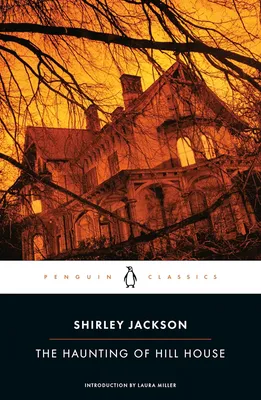
| Publisher | Penguin |
| Published | 2019-09-24 |
| Pages | 290 |
| ISBN | 9780143134770 |
| Categories | Fiction |
What Readers Say
The thing readers keep coming back to with this book — even people who read it years ago — is that lines from it live rent free in their heads. Not plot points, not jump scares, but specific sentences and images that refuse to leave. The darkness-in-the-room scene, where two characters reach for each other and then the lights come on, gets cited over and over as a moment that made people physically put the book down. That's not typical horror book talk. That's the kind of thing people say about Blood Meridian or Beloved. The fact that it gets said about a 290-page haunted house novel from 1959 tells you something.
What surprises people who come in expecting conventional horror is how psychological and slow it is. Jackson doesn't give you monsters or gore — she gives you a house that feels architecturally wrong, and a protagonist whose grip on reality loosens so gradually that you can't pinpoint when it started. Readers frequently describe the experience as "subtle" and then immediately contradict themselves by describing how shaken they were. The cognitive dissonance is part of the point. What you think you're reading and what's actually happening to you are two different things.
The most common criticism isn't really a criticism — it's a warning. Readers who want explicit, plot-driven horror sometimes feel the book doesn't deliver enough. The ending in particular divides people. But those who bounce off it tend to come back to it later, after they've read more literary fiction, and find it completely transformed. It's a book that rewards patience and punishes impatience in roughly equal measure.
Who It's For
This is the book I'd hand to someone who says they want to get into horror but doesn't want gore. If you loved the atmosphere of Rebecca or the psychological unease of The Yellow Wallpaper, Hill House is the natural next step — a full novel that sustains that specific dread over 290 pages. Readers who love Piranesi for its sense of a wrong and impossible place often end up here too; there's the same quality of architecture-as-psychology, spaces that don't behave the way spaces should.
It also gets recommended heavily to readers interested in queer subtext — Eleanor and Theodora's relationship reads as intensely homoromantic in ways the text never makes explicit but never fully dismisses either. If that's what you're looking for, it's there. And if it's not what you're looking for, it doesn't get in the way. It's that kind of book — layered enough that different readers are essentially reading different novels and all of them are right.
Reading Context
On Reddit, Hill House almost always appears alongside The Shining when people ask about protagonists losing their grip on sanity, and alongside We Have Always Lived in the Castle when people ask about books that haunt you afterward. Those are the two comparison points that tell you the most about where it sits: it's literary enough to belong next to Shirley Jackson's own quieter work, and it's scary enough to stand next to King's most personal horror. Readers in the r/horrorlit community treat it as one of the three definitive examples of slow-burn horror, typically pairing it with The Willows by Algernon Blackwood and The Yellow Wallpaper by Charlotte Perkins Gilman.
One thing worth knowing going in: this is not a book where you find out what was real and what wasn't. Jackson has no interest in resolving that for you. If you need the ending to explain what happened, you'll be frustrated. If you can sit with ambiguity — if you're okay leaving the house not entirely sure whether Eleanor was lost to madness or something else — then this book will stay with you in the way that very few books do.