Book recommendations, reviews, and reading lists.

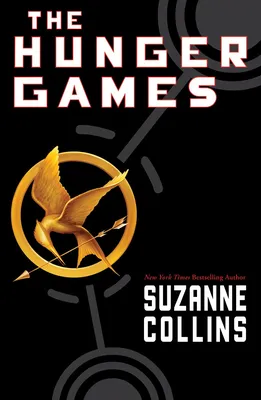
The Hunger Games
by Suzanne Collins
| Published | 2008 |
What Readers Say
The thing that keeps coming up when readers talk about The Hunger Games — especially people who've reread it as adults — is how much smarter it is than it looks. On the surface it moves like a train: fast-paced, propulsive, the kind of book people finish in a day. But readers who come back to it years later tend to describe a kind of rereading shock. What felt like a thrilling action story the first time registers, the second time, as a precise, uncomfortable portrait of PTSD, poverty, and the way systems chew up the people who fight them.
The most consistent praise is for Katniss as a protagonist. Readers emphasize that she's never petite or magically competent — she's lean because her family is poor, and skilled because survival required it. She doesn't want to lead a revolution. She doesn't even want to win. All she wants is for Prim to live. The fact that the revolution happens around her rather than through her is, for a lot of readers, what makes the trilogy feel real in a way that the imitators don't.
Mockingjay is the book that divides first-time and repeat readers more than any other installment. Collins ends the series with Katniss depressed, medicated, and questioning whether any of it was worth it — and readers who dismissed that as the series going downhill tend, years later, to call it the point of the whole thing. The ending wasn't a flinch. It was the argument.
The prequel, The Ballad of Songbirds and Snakes, gets recommended alongside the trilogy fairly often, mostly for what it adds to Snow as a character — readers call it a corruption arc done right.
Who It's For
Readers who are tired of dystopian fiction where the chosen teenager fixes everything. If you've bounced off Divergent or the dozen books marketed as "the next Hunger Games," this is the one they're all failing to be. It's also a strong pick for readers who appreciated the politics of 1984 or Parable of the Sower but want something that moves faster and hits harder emotionally. The series gets recommended constantly as a gateway book for reluctant readers and for adults who feel like they've aged out of YA — people regularly push back on both of those instincts, noting that the social commentary doesn't simplify, it just doesn't slow down.
Reading Context
The obvious comparisons readers make are to Red Rising by Pierce Brown (more brutal, more morally compromised, described by multiple readers as "The Hunger Games grown up"), Battle Royale by Koushun Takami (darker, graphic, precedes THG by a decade), and Dungeon Crawler Carl (absurdist riff on the same televised survival premise). The Player of Games by Iain M. Banks comes up as a sci-fi take on games-as-political-control that shares the thematic DNA without the YA label.
The film adaptations are competent but readers consistently note that the movies flatten the interior experience — Katniss's narration is where most of the book's actual argument lives, and the films lean into the arena action at the expense of the political analysis. The casting of Jennifer Lawrence is almost universally praised, but the later films especially lose something.
The series fits in a specific moment: it came out before the YA dystopia wave it's credited with starting, and it spent years being unfairly lumped in with the books it was actually critiquing. If the love triangle framing is the reason you've avoided it, that framing was always wrong. The Peeta/Gale question was never the point, and Collins made sure of that.