Book recommendations, reviews, and reading lists.

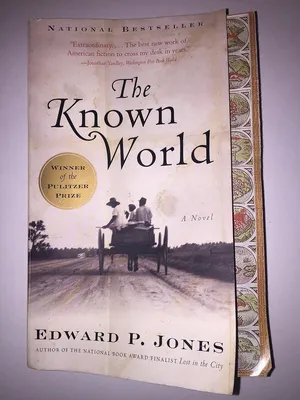
The Known World
by Edward P. Jones
| Publisher | Harper Collins |
| Published | 2003-08-14 |
| Pages | 404 |
| ISBN | 9780060557546 |
| Categories | Fiction |
What Readers Say
The premise is what stops people in their tracks: a free Black man in antebellum Virginia owns slaves. That moral complexity is the engine of the entire novel, and Edward P. Jones never simplifies it. Readers describe the prose as precise and unhurried, the kind of writing that moves through time and across perspectives with the calm authority of someone who knows complicated history and trusts you to keep up. The characters are contradictory and human in ways that most historical fiction doesn't attempt — nobody here is a symbol, everybody is a person.
It won the Pulitzer in 2004 and landed on the New York Times' "100 Best Books of the 21st Century" list, yet readers consistently call it one of the most underread American novels of this century. That gap between critical recognition and popular awareness is part of what makes it worth recommending. People who find it tend to be passionate about it.
The honest note: the non-linear structure and large cast of characters require attention. Jones doesn't hold your hand through the timeline, and the narrative moves between perspectives without announcement. Readers who thrive with that kind of structural ambition love it. Readers who need a strong linear plot engine may find it diffuse.
Who It's For
Readers who loved how James by Percival Everett complicated the morality of its source material and want a novel that does the same thing with the entire institution of slavery. Also for anyone who's read Beloved or Kindred and wants something that approaches the same history from a completely different angle — Jones isn't interested in the expected narrative of enslavement. He's interested in what happens when the moral lines blur beyond recognition.
Reading Context
The Known World consistently appears alongside a specific cluster of books: James by Percival Everett, Kindred by Octavia Butler, Homegoing by Yaa Gyasi, The Underground Railroad by Colson Whitehead, and The Water Dancer by Ta-Nehisi Coates. These are the books readers recommend together when someone asks for literature that engages with American slavery in ways that go beyond the expected. Jones also pairs with Invisible Man by Ralph Ellison and The Poisonwood Bible by Barbara Kingsolver for readers interested in broader American moral reckoning. Edward P. Jones is a notably quiet literary presence — he doesn't do the publicity circuit — which may explain why the book remains underread despite its Pulitzer.