Book recommendations, reviews, and reading lists.

The Little Prince
by Antoine Saint-Exupery
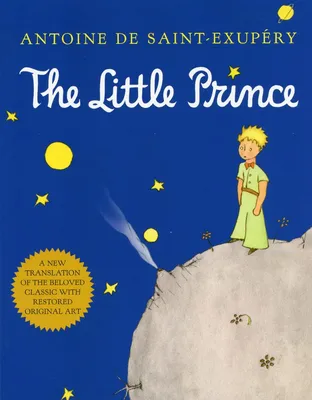
| Published | 2017-08-31 |
| Pages | 82 |
| ISBN | 9781975943769 |
What Readers Say
The thing that comes up most in discussions of The Little Prince is how it changes depending on when you read it. People who first encountered it as children describe it as a sweet, odd little story about a boy and a rose. People who come back to it as adults — after a breakup, after losing someone, after just feeling generally lost — describe it as devastating. The line about "what is essential is invisible to the eye" gets quoted constantly, but readers note that it hits differently once you've actually lived through the kind of loss the book is quietly talking about. Several people describe crying at a children's book and feeling no embarrassment about it.
The praise centers on how much Hesse packs into 82 pages. Readers call it deceptively simple — the language is plain, the story is straightforward, and somehow it contains more emotional truth than novels five times its length. The illustrations, done by Saint-Exupéry himself, are mentioned almost as often as the text — they're part of the experience in a way that feels inseparable from the words. The most common criticism is that some readers find it overly sentimental or precious, particularly on a first read as an adult without the childhood attachment. That's a fair reaction, but even those readers tend to acknowledge that specific passages cut through the whimsy and land hard.
Who It's For
I'd hand this to someone going through a transition — a move, a loss, a period of feeling unmoored — because it's one of those books that meets you exactly where you are without pretending to have answers. If you loved Siddhartha by Hermann Hesse for its quiet, philosophical approach to meaning, The Little Prince occupies similar territory in a fraction of the pages. It also works for readers who respond to The Alchemist by Paulo Coelho but want something less prescriptive and more genuinely strange.
This is a perfect gift book — it's short enough that even non-readers will finish it, beautiful enough to keep on a shelf, and deep enough that it doesn't feel like a throwaway gesture. It's also one of the best books to read aloud to someone, whether that's a child or an adult who needs to hear it.
Reading Context
Read it in one sitting — it takes about an hour, maybe less. The experience works best uninterrupted. There are dozens of English translations, and they vary more than you'd expect; the Katherine Woods translation has the most nostalgic following, but the Richard Howard translation is generally considered more accurate to Saint-Exupéry's French. Either works.
This is the third-most-translated book in the world, which means nearly everyone has heard of it, but a surprising number of adults have never actually read it. If you're one of them, don't let the children's-book label put you off. The book was written by a pilot who disappeared over the Mediterranean during World War II, and knowing that gives the final pages a weight that the story earns entirely on its own terms.