Book recommendations, reviews, and reading lists.

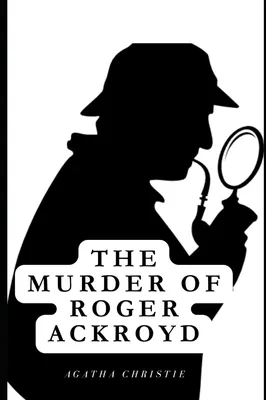
The Murder of Roger Ackroyd
by Agatha Christie
| Publisher | W. Clement Stone |
| Published | 1986 |
| Pages | 296 |
| Categories | Fiction |
| Google Rating | 0.0/5 (0 ratings) |
What Readers Say
The Murder of Roger Ackroyd is the book Reddit reaches for whenever someone asks for the greatest plot twist in fiction. The response is almost reflexive — comment after comment names it first, often without explanation, as if the title alone makes the case. When readers do explain, the language is specific: not just "surprising" but "I was not expecting that," not just "good" but a twist that made someone "absolutely fall in love with the mind of Agatha Christie." The readers who guessed it describe the payoff as "amazing." The ones who didn't describe something closer to a reckoning — a realization of what a genuinely skilled writer can do.
What separates this from other twist books is the fairness. Readers who go back and reread the opening chapter after finishing describe the experience of finding that every sentence holds up — nothing was a lie, nothing was cheated. Christie played completely straight and still fooled nearly everyone. That combination of audacity and integrity is what keeps this book at the top of lists nearly a century after it was published.
The one honest caveat is the middle. Several readers who love this book note that the stretch between the murder and the resolution can drag — structurally necessary but not Christie's most entertaining writing. The character of Caroline Sheppard is the frequent exception; she gets singled out as a genuine delight in those chapters. The overall picture is a book that is undeniably brilliant but not necessarily the most re-readable Christie — the first experience is extraordinary, but some of the tension doesn't fully survive a second pass the way And Then There Were None does.
Who It's For
This is the book for readers who want to understand what a plot twist is actually capable of — not a cheap shock or a gotcha, but a revelation that reframes everything that came before it and makes you a permanently more suspicious reader. If you've read thrillers with big endings and felt vaguely cheated, this is the corrective: Christie shows you how it's supposed to be done.
It's also the right book for readers who respond to craft over atmosphere. Roger Ackroyd isn't Christie at her coziest or most character-driven — it's Christie at her most technically precise. Readers who love puzzle boxes, who want to see a plot constructed with the rigor of a logic problem, tend to respond to it most strongly.
If someone came to Christie through Knives Out and wants the original version of that same pleasurable wrongfooting, this is the specific recommendation. It also lands well for readers who've been told to try Christie but don't know where to start — though the usual advice is to read two or three of her books first, so the full effect of what she's doing here registers clearly.
Reading Context
The standard recommendation is to not start here. Read The Mysterious Affair at Styles or Murder on the Links first — get a feel for how Christie constructs a mystery, how Poirot operates, what a normal Christie solution looks like. Then come to Roger Ackroyd with enough baseline familiarity that you can appreciate exactly how far she's departing from it. Two or three books is the consensus warm-up.
And Then There Were None and Murder on the Orient Express are the natural companions — all three get grouped together as Christie's most technically audacious work, the books where she's not just writing mysteries but interrogating the form. Readers who love one tend to seek out the other two. Roger Ackroyd is also a fixture in plot-twist recommendation threads alongside Gone Girl, Behind Her Eyes, and Piranesi — it fits comfortably in that conversation even though it predates the modern psychological thriller by decades.
The twist has leaked into general culture at this point. Readers coming to it now have to decide whether foreknowledge changes the experience. Most report that it doesn't fully — the craft is dense enough that knowing the destination doesn't ruin the route. One repeated piece of advice: read the original novel, not the adaptations. Screen versions have a way of softening or altering the ending in ways that undermine the whole point.