Book recommendations, reviews, and reading lists.

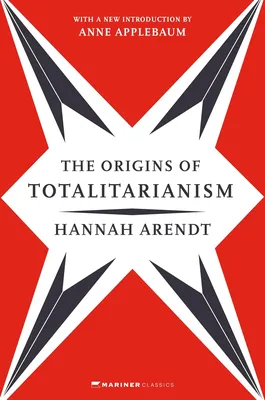
The Origins of Totalitarianism
by Hannah Arendt
| Publisher | Andesite Press |
| Published | 2017-08-24 |
| Pages | 550 |
| ISBN | 9781376196207 |
| Categories | History |
What Readers Say
I won't pretend this is an easy read. At 550 pages of dense political philosophy and historical analysis, The Origins of Totalitarianism is the heaviest book on any propaganda reading list. But readers who get through it consistently describe it as one of the most important books they've ever read — the kind that changes how you see political movements, not just historically but in real time.
Arendt's account of how totalitarian movements take hold is what keeps people coming back. She maps the process: how propaganda constructs a parallel reality, how individuals get isolated from civic life, how ordinary people become true believers. What makes it lasting is that she's describing a set of conditions and techniques that recur. Readers reach for this book specifically when they feel democracy is under threat — it spiked in recommendations after the 2016 election and keeps appearing in "books for our times" threads alongside Orwell and Orwell-adjacent reading.
The chapters on propaganda alone are worth the effort, even if you don't finish the rest. Arendt's insight that totalitarian propaganda doesn't try to be believable — it tries to make reality itself feel unstable — hits harder now than it probably did when she wrote it.
Who It's For
Readers willing to do serious intellectual work in exchange for one of the most important frameworks for understanding political extremism ever written. This is not the book to start with if you're new to the subject — Postman or Cialdini are better entry points. But if you've read a few of the accessible books and want the full picture, Arendt is where the deeper understanding lives. I keep thinking about this one long after finishing it, which is the best endorsement I can give.
Reading Context
The Origins of Totalitarianism sits alongside Orwell's 1984 and Animal Farm as the canonical texts on authoritarianism, but Arendt is doing something different — she's analyzing real history rather than fictionalizing it. Readers often pair it with Timothy Snyder's On Tyranny (a much shorter, more practical companion) and with Hoffer's The True Believer (which covers the psychology of mass movements in 200 pages instead of 550). For readers who want Arendt's ideas in a more accessible form, her essay "The Banality of Evil" and the film Hannah Arendt (2012) are frequently recommended starting points.