Book recommendations, reviews, and reading lists.

The Stand
by Stephen King
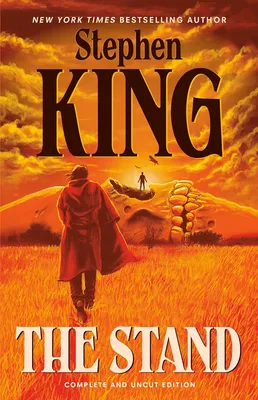
| Publisher | Vintage |
| Published | 2012-08-07 |
| Pages | 1201 |
| ISBN | 9780307947307 |
| Categories | Fiction |
What Readers Say
The thing that comes up again and again with The Stand is compulsive readability — which is almost absurd to say about a 1,200-page book. Readers describe finishing it while making breakfast, doing laundry, ordering pizza instead of cooking because they couldn't put it down. That's not marketing copy; that's what people actually report. For a novel this long, the pacing complaint you might expect almost never shows up from people who've actually read it — though readers who compare it directly to Swan Song by Robert McCammon do find King's version slower and more deliberately paced, and that camp is vocal. The consensus seems to be: if you want relentless forward momentum, McCammon might edge King here. But most readers aren't making that comparison. They're just describing a book they couldn't stop reading.
What surprises people is how much it holds up to rereading, and how differently it lands at different points in life. Readers who first encountered it as teenagers describe it as their undisputed favorite book of that period — and then return to the extended version years later and find the extra 500 pages add depth they didn't expect. The other thing that catches people off guard is how the pandemic framing hits. Readers who picked it up during or after the COVID years describe a strange dual effect: it's calming because it shows how much worse things could be, and then unsettling because the government response feels completely plausible. It has that quality where fiction accidentally becomes prophecy.
The consistent criticism is length — specifically in comparison to what readers get per page in the middle sections. But even that criticism tends to come from people who finished it and still recommend it. Nobody seems to regret reading it. The stronger version of the complaint is that the ending deflates relative to the buildup, a feeling that's common enough to be worth knowing before you start. The setup and the journey are nearly universally loved. The resolution is more divisive.
Who It's For
This is the book for readers who want post-apocalyptic fiction that takes its time building a world you actually care about losing. If you've worked through The Road by Cormac McCarthy and wanted something that gives more space to the survivors and how they rebuild — not just the grief — The Stand is the answer. It's also a natural next step for anyone who came to King through 11/22/63 and discovered he writes far more than horror. Several readers describe that exact path: finishing 11/22/63, starting The Stand the same night, and realizing King's range is wider than they'd assumed.
If you're specifically drawn to big books — the kind that take over your life for a week or two — this belongs in the same breath as Pillars of the Earth by Ken Follett and A Gentleman in Moscow by Amor Towles. It earns its length the same way those books do: through character investment rather than plot inflation. One note on edition: the extended uncut version is the one readers consistently recommend. The shorter original is fine, but the extra pages are apparently not filler — they're why the characters feel as real as they do.
Reading Context
The Stand gets recommended alongside Station Eleven by Emily St. John Mandel, The Dog Stars by Peter Heller, and Parable of the Sower by Octavia Butler whenever post-apocalyptic fiction comes up — which tells you something about where it sits in the genre. It's foundational in the same way The Road is, but warmer. McCarthy writes absence and grief; King writes aftermath and community. They're doing different things with the same raw material, and readers who love one often seek out the other.
For King readers working through his catalog, The Stand tends to get grouped with It and 11/22/63 as his most ambitious long-form work — the books where his scope matches his ambition. It also connects loosely to the Dark Tower series through the character of Randall Flagg, which is worth knowing if you're planning to read more King afterward. The audiobook is a legitimate way in — at over 1,200 pages, it's a natural fit for long listening sessions, and multiple readers have done it that way. Give it time to build. The first 200 pages are setup, and the payoff depends on having lived with these people long enough to care what happens to them.