Book recommendations, reviews, and reading lists.

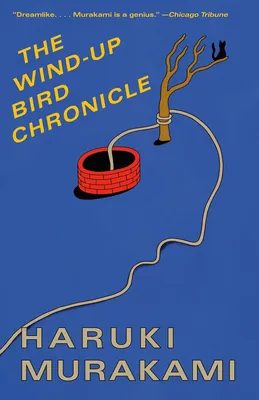
The Wind-Up Bird Chronicle
by Haruki Murakami
| Publisher | Vintage |
| Published | 1998-09-01 |
| Pages | 625 |
| ISBN | 9780679775430 |
| Categories | Fiction |
What Readers Say
The response to The Wind-Up Bird Chronicle is almost always one of two things: total absorption or complete frustration, and honestly, both reactions make sense. One reader described falling in love with it during the aimless months after college while waiting for life to start. Another threw it across the room. Murakami tends to have that effect.
What keeps coming up in reader discussions is the prose — specifically how deceptively plain it is. Someone made the point that the writing is quite colloquial, "fluid but not ornate," and that this is actually what makes the story work. The strangeness of what happens to Toru Okada lands harder because it's delivered so matter-of-factly. A guy loses his cat, then his wife, then spends a lot of time at the bottom of a dry well. Murakami doesn't flinch. You don't either, somehow.
It gets mentioned alongside books like House of Leaves and Geek Love when readers talk about books that genuinely wounded them — the Kafka-standard of fiction that cuts rather than comforts. That's a meaningful endorsement. It also shows up consistently in recommendations for books about loneliness and existential drift, which tells you something about what it's actually doing underneath all the surrealism.
A vocal contingent recommends it as the best entry point into Murakami's work, before moving on to 1Q84. I think that's right. It's strange enough to show you what Murakami is capable of, grounded enough that you won't lose the thread entirely.
Who It's For
This book is genuinely for people in a slow, directionless period — between jobs, between relationships, between versions of themselves. Toru Okada is unemployed and adrift at the start, and the novel doesn't rush him out of that state. If you're currently in a waiting room version of your own life, The Wind-Up Bird Chronicle will feel almost uncomfortably specific.
It also works for readers who've been burned by "philosophical" fiction that's really just pretentious and airless. The existential weight here is earned — there's a whole buried layer about Japan's forgotten campaign in Manchuria during World War II that gives the strangeness real moral gravity. It's not navel-gazing. It's trying to say something.
That said, if you need resolution, momentum, or a plot that snaps closed at the end, this isn't your book. Murakami is not interested in tying things up. If that sounds like a feature rather than a bug, you're the right reader.
Reading Context
I'd pick this up when you have time to let it breathe. It's 625 pages, and the pacing is deliberately slow in the early sections — Okada sitting in the alley, waiting for a cat that doesn't come back. That slowness is the point, but it requires patience, and it rewards patience. Don't start it in a week when you need to feel productive.
It pairs well with other Japanese fiction that plays with mundane surfaces and strange undercurrents — Convenience Store Woman, Oyamada's The Factory, Tsumura's There's No Such Thing as an Easy Job. If you want something with similar philosophical weight but more lyrical prose, Ishiguro is the natural companion: The Remains of the Day or Never Let Me Go cover some of the same emotional territory with a different style.
One more thing: don't read the plot summary too carefully before you start. Half of what makes this book work is not knowing what you're walking into.