Book recommendations, reviews, and reading lists.

Junichiro Tanizaki
1 book on Read & Recommend
What Readers Say
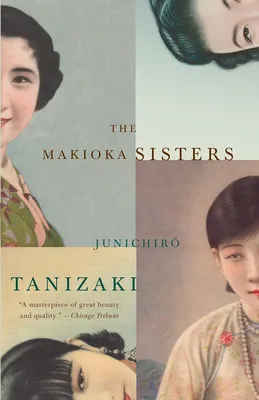
I’ll be honest — the mentions I have to work with here are surprisingly sparse for a writer of Tanizaki’s stature. What I can tell you is that among readers who discuss Japanese classics, The Makioka Sisters is the title that surfaces again and again as essential Tanizaki. The praise tends to center on his immersive, almost hypnotic prose — a style readers describe as both elegant and deeply sensory, with an almost obsessive attention to the textures of daily life, from the way kimono fabric drapes to the precise choreography of traditional social rituals. There’s a domestic density to his work that fans find transporting, even when the plot moves at a glacial pace.
The common criticism, from what I gather, is that Tanizaki demands patience. Readers who come to him expecting the stark psychological intensity of Mishima or the surreal alienation of Kobo Abe sometimes find the endless family negotiations and marriage machinations in The Makioka Sisters a bit stifling. But those same readers often acknowledge that the slow burn is intentional, and that the book’s cumulative power sneaks up on you quietly — it’s less about dramatic events than about the erosion of a world. His exploration of erotic obsession and the clash between tradition and Westernization also comes up, though my specific mentions here are light on those works. What’s clear is that readers who appreciate interiority and subtle social observation tend to fall hard for him.
Where to Start
Given my limited mentions, the entry point is practically a single signpost: The Makioka Sisters. This is the novel readers recommend when someone asks for the definitive Tanizaki experience. It’s pitched as ideal for readers who love sprawling family sagas, elegantly restrained melancholy, and fiction that functions as a kind of cultural anthropology — watching the slow dissolution of an upper-class Osaka family in the years before World War II. If you’re the type who found Downton Abbey compelling for its rituals and class anxieties, this is likely your door in.
For readers who want something tighter or darker, the mentions don’t give me specifics to work with, but the general Japanese literature circuit often points to his shorter novels like Quicksand or The Key for those curious about his more psychologically twisted side. I just can’t confirm that consensus from the source material I’ve been handed here.
Reading Context
Tanizaki sits squarely in the pantheon of 20th-century Japanese literary giants — the mentions place him on the same “must-read” classical shelf as Kawabata, Mishima, Akutagawa, and Soseki. Where he’s usually differentiated is in his thematic preoccupation with the tension between traditional Japanese aesthetics and encroaching Western modernity, a subject he wrestled with as both a personal obsession and a cultural diagnosis. Readers tend to compare his aesthetic sensibility to Kawabata’s — both are seen as masters of minimalist beauty and emotional restraint — though Tanizaki is often described as the more psychologically probing of the two. Adaptations don’t surface in my mentions, nor do specific cultural moments, which frankly feels like an oversight given how frequently The Makioka Sisters has been filmed and staged. The takeaway is that Tanizaki is canonical, but my particular batch of reader chatter barely scratches the surface of his reputation.