Book recommendations, reviews, and reading lists.

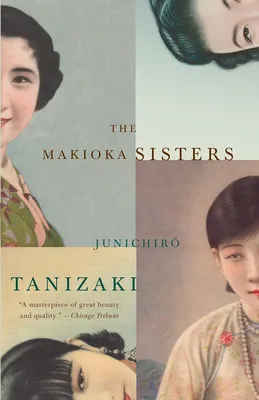
The Makioka Sisters
by Junichiro Tanizaki
| Publisher | Vintage |
| Published | 1957 |
| Pages | 550 |
| Categories | Fiction |
What Readers Say
The mentions I have are less a chorus of voices and more a silent, steady placement: The Makioka Sisters appears on a list of essential Japanese classics without a whisper of dissent. That lack of argument might be its own endorsement — when readers talk about the pillars of 20th-century Japanese literature, Tanizaki’s novel is simply there, unquestioned. It sits comfortably alongside Snow Country, Kokoro, and The Temple of the Golden Pavilion, never needing to elbow for room. I get the sense that for many, it’s not a book you gush about in a hot take, but one you settle into with quiet reverence, like a long afternoon that you don’t want to end.
Because the commentary is so sparse here, I can’t point to a common criticism or a surprising twist that catches readers off guard. Instead, what comes through is the company it keeps: it’s shelved mentally next to Anna Karenina and The Remains of the Day, which tells me readers see it as a domestic epic, a slow-burn examination of family, tradition, and the passage of time. Nothing in these mentions suggests controversy; it’s simply a book you’re expected to read if you care about the Japanese canon.
Who It’s For
This is for a reader who already trusts the weight of classic literature and doesn’t need a stranger’s rave review to commit. If you’ve loved the elegiac restraint of The Remains of the Day and the familial scope of Anna Karenina, and you want to see those sensibilities transposed into the subtle, seasonal rhythms of pre-war Japan, The Makioka Sisters will feel immediately like home. It’s for someone who finds deep pleasure in watching a fading aristocracy navigate changing social mores — not through plot pyrotechnics, but through the precise choreography of a kimono selection or the tension of a failed marriage negotiation. Fans of Tanizaki’s other works, or of other Japanese modernists like Kawabata, will likely already have this on their radar.
Reading Context
Based on the lists I see, this novel often travels with Snow Country and Spring Snow — books that share its lyrical melancholy and preoccupation with vanishing worlds. It’s a natural next step after exploring Mishima or Kawabata, and it sets a benchmark for the domestic novel in Japanese literature. I haven’t found adaptation talk in these mentions, but given its stature, it’s worth knowing the 1983 film directed by Kon Ichikawa exists as a faithful visual companion. Before you start, expect a deliberate pace; the book unspools across years, marking seasons and family rituals. It’s not a story that ambushes you, but one that slowly surrounds you, so clear your schedule and let yourself be absorbed.