Book recommendations, reviews, and reading lists.

The Temple of the Golden Pavilion
by Yukio Mishima
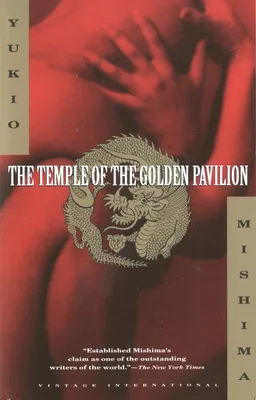
| Publisher | Everyman's Library |
| Published | 1959 |
| Pages | 298 |
| Categories | Fiction |
What Readers Say
I see Mishima's novel leaving a deep, unsettled mark on readers — it’s rarely forgotten once you've turned the final page. Many are drawn to the sheer intensity of the protagonist’s obsession, the way beauty becomes a torment so acute that the only release is annihilation. The prose, even in translation, feels both cold and feverish, and I often notice people mentioning how Mishima traps them entirely inside a mind that’s warping reality. There’s a hypnotic quality to the narrative that makes the eventual arson feel like the only possible outcome — frighteningly inevitable rather than shocking.
What consistently captivates readers is the philosophical spine beneath the story. Mishima doesn't just recount a historical event; he dissects ideas of Zen, aesthetics, and the relationship between inner inadequacy and outward perfection. The temple itself becomes a character, a silent, shimmering provocateur. I've seen readers describe a strange claustrophobia while reading — not from the setting, but from being sealed inside the protagonist’s logic, a logic that begins to feel disturbingly reasonable.
The common caution is that the book demands patience, particularly in its denser, introspective passages. Some find the protagonist’s internal loops exhausting, though that’s precisely what others admire. I rarely see the novel discussed without someone noting how it mirrors Mishima’s own life and death, a layer that adds both fascination and an extra chill.
Who It's For
This is for you if you’ve been haunted by No Longer Human and want to explore another slow-motion psychological collapse told with almost unbearable precision. It will speak to readers who find themselves drawn to stories where beauty is not a comfort but a threat — where the sublime inspires destruction instead of awe. Fans of Dostoevsky’s Notes from Underground will recognize that same hyper-conscious, self-lacerating voice, transplanted into a Japanese context of ritual and discipline.
I’d also lean toward those who appreciate literary fiction grounded in actual event: the novel fictionalizes the 1950 burning of Kyoto’s Kinkaku-ji by a young monk. If you’re curious about Mishima beyond the headlines of his dramatic life, this is the ideal entry point — more controlled and symbolic than Confessions of a Mask but no less revealing of the author’s fierce preoccupations.
Reading Context
Within Mishima’s own work, I’d place this between the youthful, confessional energy of Confessions of a Mask and the epic sweep of the Sea of Fertility tetralogy — a perfect distillation of his themes. Readers often pair it with Kokoro or Snow Country, both of which share a similar luminescent sadness, though neither carries the same undercurrent of violence. The novel stands at the heart of modern Japanese classics, a meditation on the fragile boundary between reverence and destruction.
Before starting, know that the novel draws directly from the transcript of the real arsonist’s trial, and reading about that historical event afterward can deepen your appreciation of Mishima’s inventiveness. There’s no cinematic adaptation that captures the book’s internal architecture, so let the prose be your only guide. And if you’re planning a visit to Kyoto, I’d suggest reading this before you see the rebuilt pavilion — it forever changes how you look at gold reflected in still water.