Book recommendations, reviews, and reading lists.

Snow Country
by Yasunari Kawabata
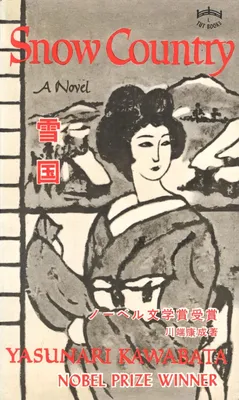
| Publisher | Vintage |
| Published | 1996-01-30 |
| Pages | 193 |
| ISBN | 9780679761044 |
| Categories | Fiction |
What Readers Say
Readers consistently point to that opening line — "The train came out of the long tunnel into the snow country" — as one of the great sentences in world literature, and I have to agree that it sets the tone for everything that follows. What people seem to find remarkable about Kawabata is how much atmosphere he creates with so little. The prose gets described as spare, almost haiku-adjacent, building an entire emotional world out of restraint rather than excess. One reader put it perfectly: the doomed love affair between a Tokyo dilettante and a rural geisha is "rendered with so much beauty and emotional precision it almost hurts to read." That phrase keeps coming back to me — the idea that precision itself can be what makes something painful.
The consensus among those who recommend it is that this is Kawabata's technique at full stretch. It's not a book that announces its brilliance loudly; it accumulates quietly. Readers who connect with it talk about the remote mountain resort setting as almost another character, the snow itself becoming a presence that isolates and intensifies the relationship at the center. The emotional register is consistently described as meditative and bittersweet — nobody comes to Snow Country expecting resolution or catharsis, and that's precisely what its admirers value about it.
Who It's For
If you loved the quiet devastation of Ishiguro's The Remains of the Day and want something that operates in a similar emotional register, or if you've read Soseki's Kokoro and are looking for another Japanese master who demands you slow down and sit with discomfort, this is your book. Readers who recommend it often pair it with other mid-century Japanese classics — it sits comfortably alongside Mishima and Dazai on the shelf of essential reads. But unlike Mishima's explosive intensity or Dazai's spiraling despair, Kawabata offers something more restrained, and people who appreciate that particular flavor of subtlety are the ones who become evangelists for it.
This is not for readers who need plot momentum or clear narrative arcs. The people who love Snow Country are those who can find devastation in a glance that lingers too long, in the space between what two people say and what they mean. It's a short novel that asks you to read slowly, and if that sounds like a promise rather than a warning, you're the audience.
Reading Context
The most common pairing that comes up in reader discussions is Kokoro by Natsume Soseki — both novels share a meditative quality and a willingness to let silence do the heavy lifting. Readers describe them as "different flavors of the same tradition," and I think that's exactly right. They're books you read in conversation with each other, not as competitors. More broadly, people situate Snow Country within the mid-century Japanese literary canon alongside Mishima, Dazai, and Endo, and it tends to be recommended as the atmospheric counterweight to those writers' more visceral approaches.
There isn't a major film adaptation that readers consistently reference, which is unusual for a book this influential. What I'd say before starting: know that this is a novel that rewards patience. Don't rush through the opening scene on the train, even though you'll be tempted to. The way Kawabata uses the reflection of a woman's face in a window — the way that image establishes everything about voyeurism, distance, and impossible connection — that's the entire book in miniature. If you let it, it'll teach you how to read it.