Book recommendations, reviews, and reading lists.

Yasunari Kawabata
1 book on Read & Recommend
What Readers Say
From the snippets I’ve gathered, readers treat Yasunari Kawabata with quiet reverence. He doesn’t spark the kind of heated debate or fervent fandom that some of his contemporaries do, but when his name appears, it’s almost always with a nod of approval. One commenter simply says Snow Country is “another good one,” and another immediately echoes, “Kawabata. Wonderful novel.” There’s an understated confidence here — readers seem to agree that picking up Kawabata is a safe, rewarding bet, especially if you’re exploring Japanese literary fiction. No one in these threads dives into detailed praise or critique, but the consensus, thin as it is, paints him as a staple, a writer whose work holds up without needing loud advocacy.
Where to Start
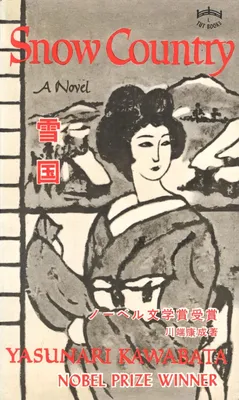
If you’re staring at Kawabata’s shelf, Snow Country is the title every mention pushes forward. It’s the only book of his named in these discussions, and the recommendations are direct: “Snow Country by Yasunari Kawabata is another good one.” There’s no lingering debate about which novel best captures his essence — this is the entry point readers offer up without hesitation. Since no other works come up in these particular threads, I can’t point you to an alternative starting place, but that clarity is telling. For the reader who simply wants to taste what Kawabata is about, Snow Country appears to be the consensus choice. It’s short, widely available, and seems to serve as the ambassador for his entire body of work.
Reading Context
In the landscape of 20th-century Japanese literature, Kawabata sits comfortably among the giants. The mentions here place him naturally alongside Yukio Mishima — one user suggests that “can’t go wrong with anything Mishima” and immediately adds Snow Country as another solid pick, as if the two authors share a neighborhood in the reader’s mind. He also appears on lists of essential Japanese classics beside figures like Junichiro Tanizaki, Osamu Dazai, and Natsume Soseki, signaling that he belongs to the same canonical tier. There’s no talk of adaptations or pop-culture moments in these threads; his reputation rests entirely on the page. If you’ve already enjoyed Mishima’s intensity or Soseki’s psychological depth, Kawabata is often the next name readers will hand you, a quiet master whose work bridges the traditional and the modern in Japanese fiction.