Book recommendations, reviews, and reading lists.

Confessions of a Mask
by Yukio Mishima
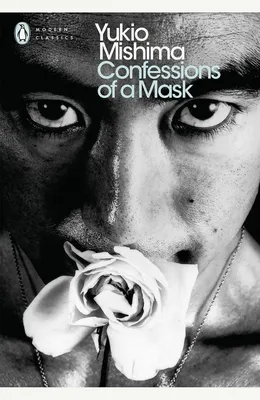
| Publisher | New Directions Publishing |
| Published | 1958 |
| Pages | 260 |
| ISBN | 9780811201186 |
| Categories | Fiction |
| Google Rating | 3.5/5 (4 ratings) |
What Readers Say
I’ve found that readers consistently fixate on two things: the raw, almost surgical honesty of Mishima’s self-portrait, and that one comparison that pops up again and again — that this is like No Longer Human, but sharper, deeper, and ultimately more rewarding. They call it a superior version of Dazai’s alienation, because Mishima doesn’t just wallow in despair; he dissects the very structure of a mask built to survive in a society that demands heterosexuality and conformity. The praise centers on the prose, which is somehow lush and icy at once, and the way the protagonist’s inner world — his early erotic fixations, the elaborate fantasies about death and Saint Sebastian — feels both arrestingly beautiful and profoundly uncomfortable.
The discomfort is deliberate, though. Readers often note that the book’s obsessive introspection and the narrator’s self-loathing can be a lot to sit with, and that’s the crux of the common criticism: it’s not an easy read. “Not everyone’s appetite,” as one source put it. But what surprises many is how modern the central struggle feels — a queer identity forged in secrecy, the performance of a self that isn’t one’s own — despite the pre-war Japanese setting. They come for the classic status and stay for the sheer intensity of a mind unwilling to look away from its own darkness.
Who It's For
This is for readers who were drawn to the psychological abyss of No Longer Human but wished for something more aesthetically charged and intellectually combative — where Dazai offers a whimper, Mishima gives you a scream cloaked in elegance. If you need your protagonists likeable, move on. But if you can handle a narrator who treats his own life as a problem to be solved, and you appreciate a literary maximalist who pushes into difficult territory without flinching, start here.
It’s also a perfect entry point for anyone curious about Mishima’s wider project. Think of it as the key to his obsessions: the beauty of violence, the tyranny of the flesh, the construction of a false self. For those already deep into confessional, philosophically dense fiction — say, Dostoevsky’s Notes from Underground or the pain of Proustian self-examination — this will land with visceral force.
Reading Context
Most readers I’ve encountered treat this as the gateway to Mishima’s heavier works. The natural next step is The Temple of the Golden Pavilion, which amplifies the obsession with beauty and destruction, and then, if you’re still standing, Spring Snow and the whole Sea of Fertility tetralogy. Pairing it with No Longer Human is almost mandatory; the two novellas talk to each other across the same post-war Japanese landscape of failure and identity, and reading them back-to-back gives you a crash course in two very different kinds of literary breakdown.
Go in knowing that the novel is semi-autobiographical, set in the 1930s and ’40s, and that the “mask” is a literal survival mechanism — the narrator’s attempt to perform heterosexual desire while hiding a homosexuality he can’t yet name. The language is dense and the psychological self-harm can feel relentless, but that’s the point. No film adaptation to watch here, though Mishima’s own theatrical self-mythologizing looms large, so the book often reads like a rehearsal for the man he would become.